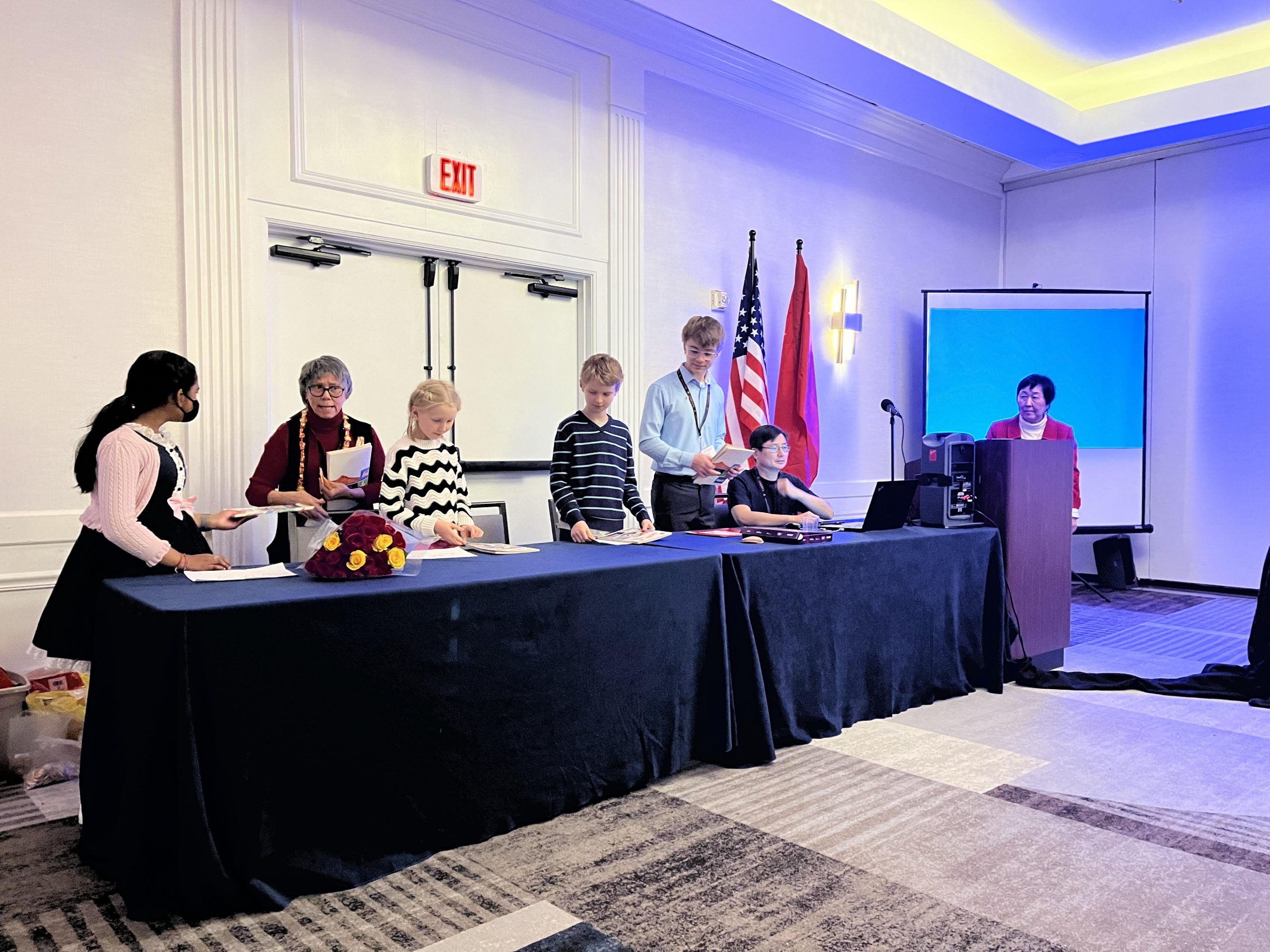
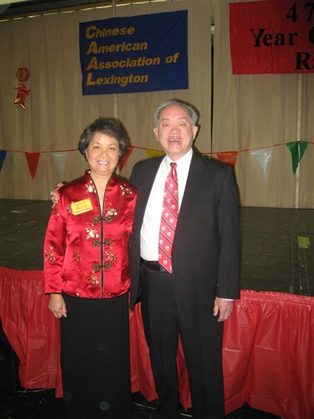
My dear friend, Winny Lin, fellow board member at USCPFA-South Bay Chapter, made an impressive presentation at the 50th Anniversary US-China People’s Friendship Association’s Washington DC Seminar this October, 2024.
She first pointed out the unfavorable opinion the Americans have towards China today, but she felt that Better Understanding and Relationship can still be achieved and encouraged via Education and she is presently using Outschool an online education platform to conduct her class. Her first online was called ‘Introduction to China”. She has designed two special Mandarin Chinese classes – one for 5-10 years olds an another for 11-16 years olds. She loves to teach language through culture and create lots of fun and interactive lessons. Many of her students are from the United States, but some from Russia, Wales, Israel, the United Kingdom, Ireland, Indonesia, Germany, Canada, and New Zealand. So far , after 3+ years, she has taught 1,482 learners, and many students and parents have “liked” her classes.
She said,” When we start class, they stand up, bow to the teacher, and then sit down just like the students in China do. They follow directions and do homework. The older ones, in the 11-16 year-old sections even do research after class. The more I expect them to do, the happier they are. People have asked me why so many students wanted to take Mandarin Chinese. From my observation, and a survey of my students in class. the reasons are: It seems cool and trendy to know some Chinese or just another language. Many students have watched some TV shows (Over the Moon), movies (like Mulan and Kung Fu Panda), and became interested in China.
“The materials I have covered are:
Four major Chinese holidays (Chinese New Year, the Lantern Festival, the Dragon Boat Festival and the Mid-autumn Festival).
Customs and traditions (what Chinese eat, wear, do on all these holidays and most, importantly, the Chinese way of thinking).
History, art, and geography (for example, the first emperor :Qin Shi Huang, the Yuan Dynasty, the terra cotta warriors, Chinese porcelain, the Yellow River, Tibet, and major cities such as Beijing, Shanghai Guilin and Xi’an) .
Chinese poetry (Li Bai’s Quiet Night, 凉州词)and Chinese traditional music instrument (the er hu, zheng, and moon guitar).
Chinese songs (你笑起來真好看, 茉莉花) and stories, such as the Monkey King, Kung Fu Panda, and Chinese ghost stories.
The Olympics, what sports are popular in China, and the Chinese school system, including information about the gao kao, college entrance examination .
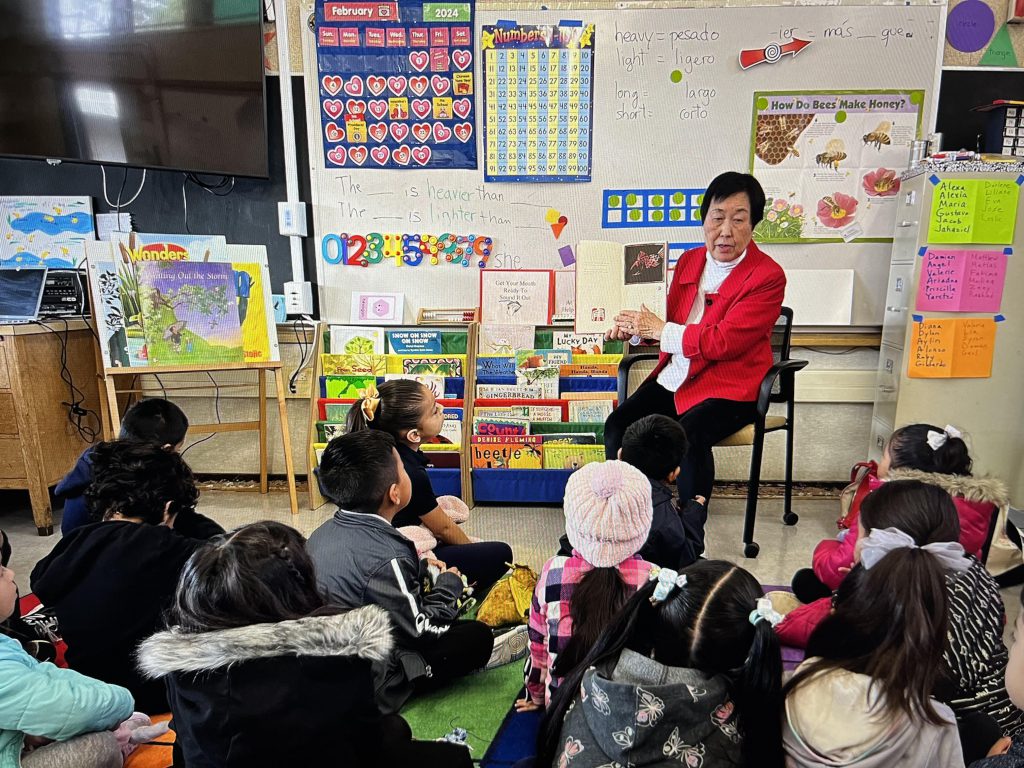
This year, the Year of the Dragon, I took a group of eight to Ygnacio Valley Elementary School in Concord, California to help them celebrate Chinese New Year. These eight included two classically trained artists, graduates from Guangdong Art Institute, and two Chinese calligraphers. We did drawings of Chinese dragons, storytelling of “The Story of Nian,” and wrote a Chinese character, “good luck 福” . This school has about 400 students, and the majority are Latinos. The fun part was when the principal led the Chinese dragon dance through the whole school. The students were very excited. Also, they took home red envelopes with lucky money, with a note in Spanish telling what the lucky money meant.
In 2023, for the Year of the Rabbit, my church, Walnut Creek Presbyterian Church, celebrated the Lunar New Year with about 200 participants. We had three Chinese artists, set up booths for the Chinese zodiac and paper folding. We also had a Chinese dragon dance, rabbit line dance and storytelling.
I have also brought Chinese educators from Anshan, China in 2016 to Wren Ave. Elementary School in Concord. They taught students Chinese games and told students about Chinese schools through PowerPoint presentations.”
This reminds me of what I did in the last 40 years before we moved to California. I have connected schools in China with several districts in Kentucky. Not just one class, or one school, but several school districts (Daviess County Public Schools, Owensboro Catholic Schools, Henderson Schools, Lewis port Public Schools, Evansville Christian School) . As a result, students came all the way from Anshan, China to visit their pen pals in Kentucky. Therefore, thousands of students have been introduced to China and Chinese culture.
My husband and I also volunteered in Asheville, North Carolina for three summers atMy Camp China, which is a program for Chinese children who have beenadopted by American families. The older ones are already married and in their late 20s. Above all, I am most proud of this group that I started teaching in 1998 at First Presbyterian Church in Owensboro, Kentucky. Through the years, these 2- or 3-year-old Chinese children, especially girls, adopted by American families have studied Chinese language and culture from me, and are now in their mid-twenties. One of the mothers , Beth Hubbard, has become the president of Owensboro/Henderson Chapter, of USCPFA, and another parent, Carol Gehret, is the chapter treasurer. Beth’s daughter, Lily, has become a leader and activists for Asian Americans at her college, the University of Southern Indiana. Others have shown Chinese influence in their area of work.
You see, when you sow seeds everywhere, you don’t know where they may germinate, but somehow you can expect a “ harvest”
Several parents reached out to me. They brought their children to participate in my presentation—Aarya, (10) from DC, Vivian (8), Max (11) both from Minnesota and Oliver (15) from Seattle. I have given them Chinese names 雷伊洁, 文伊敏, 文可明, 白可明。By looking at the middle characters, you can tell we all are in the same family tree. That is our Chinese custom. 男的排”可” , 女的排 “伊” .
During my hour long presentation, they all got a chance to shine—Aarya recited 涼州詞, brother Max and sister Vivian recited 靜夜思, while Oliver gave a long speech what China meant to him. 他们都说的字正腔圆。and made me very proud.
Oliver said, “當我第一次來林老師的課堂時,我什麼都不懂, 但是這三年來, 我的中文進步很多,現在中國在我的生命當中,意義重大!” “When I first attended your class, I did not understand anything, but after three years my Chinese improved. Now China means a lot in my life.”
Both he and his mother joined our South Bay chapter and attended Washington Seminar for 3 days. We even visited Chinese-American Museum in DC, and attended the 50th anniversary of US-China People’s Association at China Embassy as guests of honor. All are so unforgettable! Many people now are following Oliver and want to see what he will do in the future!”
——————————————————————————————————————
Winny Lin, Board of Director at USCPFA- South Bay Chapter, was born in Guilin, China, but grew up in Taiwan. In 1971, she came to the U.S. to attend Illinois State University. She earned a master’s degree in special education and then taught for more than 50 years in Kentucky and California public schools before teaching Mandarin Chinese on Outschool,
Billy is a great fan and admirer of this dynamic cross-cultural connector and teacher. She is always smiling and always reaching out with joy, enthusiasm, and caringness.
I am very glad to be a “post-90s” person—having celebrated my 90th birthday. Looking back on the past, it is fortunate that I have many friends in my life, including those from France, the United Kingdom, Japan, the United States, Italy, Germany, Singapore… and so on.
Some young friends asked me: How can you have so many friends? And be able to maintain long-term communication and friendship? I thought about it. Perhaps it can be summed up in two sentences: Treat people with sincerity(以诚待人) and make friends through literature(以文会友)!
Treat people with sincerity(以诚待人)
Chinese traditional culture believes that “integrity is the foundation of being a person and establishing a career.” There is a Chinese proverb: “Those who treat others with sincerity will also be treated with sincerity by others.” It means that if you treat others sincerely, others will treat you sincerely in return. There is also an ancient saying: “Treating people with sincerity will become clear over time.” It means that treating others with a sincere attitude, over time, others will naturally understand your intention. Therefore, treating people with sincerity is a bridge to communicate with the soul and the foundation for making friends.
Make friends through literature(以文会友)
Making friends through literature is to make friends and enhance friendship through the exchange of cultural knowledge. Many of my friends in the international academic community have become good teachers and friends through in-depth academic exchanges. Through mutual learning and sharing academic knowledge, we can increase our common language and understanding, and thus establish deep friendships. The origin of this idiom can be traced back to ancient Chinese cultural exchanges and friendship concepts. As it is said in “The Analects of Confucius · Yan Yuan”: “A gentleman makes friends through literature.” In the Song Dynasty, Liu Yong’s “Nüguanzi” poem says: “Make friends through literature, endure the temptation of floating melons and plums and be careful in making promises.” In ancient times, cultural knowledge was an important medium for people to communicate and establish friendships, sharing their hearts and enjoying each other’s company to enhance mutual understanding and friendship.
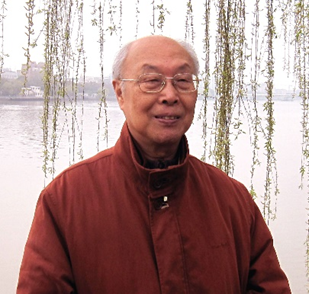
Prof. Wang Lili was the first Vice President of Ningbo University and an esteemed Material Scientist in China. He was responsible for getting me back to teach Architecture at Ningbo U. in 1991. He is certainly one of my most admired, respected, and loved cousins – we are related as his maternal grandmother was the youngest sister of my paternal grandfather. I requested that he write something for my Friendship & Friendshipology Website, and within a week I received his response:
Professor Larry Yu-Chi Ho is a prominent figure in control theory, particularly known for his work in dynamic systems, optimization, and game theory. A Chinese-American mathematician, he was born in Shanghai and later moved to the U.S., where he pursued his studies at MIT and Harvard, earning a Ph.D. in applied mathematics. His contributions to control theory have been significant, especially in fields like differential games, stochastic estimation, and discrete event dynamic systems
Throughout his career, Ho has made substantial advancements in areas like perturbation analysis and ordinal optimization, methods used to simplify complex optimization problems without assigning precise numerical values. His work, such as the “Ho-Kashyap Rule” in pattern recognition and his studies in optimal control, has been highly influential.
Although Professor Ho retired from teaching at Harvard in 2001, he remains active in research. In China, he maintains a popular science blog on ScienceNet.cn, where he shares insights on his personal experiences, research, and topics of broader scientific interest. From 2001 to 2018 Professor Ho was chief scientist at the Center for Information and Networked Systems ( CFINS) of the Department of Automation at Tsinghua University. His chief duties were to help bring staff and researchers at CFINS to World Class standard and put the Center on the world map. He visited CFINS every year for one month at a time. He established new courses and did collaborative research with young local staff members at the center. Since 2018 he worked with CFINS remotely and hosted visits from staff from Tsinghua at Harvard/ Boston.
According to Harvard Profile, Professor Ho was a long-time faculty member at Harvard’s School of Engineering and Applied Sciences (SEAS), where he contributed significantly to systems engineering and applied mathematics. His research focuses on optimal control, game theory, and the mathematical underpinnings of decision-making processes. He has mentored many Ph.D. students, contributing to their development as leading scholars in control theory. His academic accolades include being a fellow of prestigious organizations such as the National Academy of Engineering and IEEE.
On Science Net,( started in 2007) Professor Larry Yu-Chi Ho has been sharing his scientific insights and personal reflections through blog posts. He discusses topics ranging from his personal experiences in research to broader topics such as the philosophy of science, education, and the importance of balancing scientific innovation with ethical considerations.
His posts emphasize a deep connection to both his professional achievements and his personal life, offering readers a holistic view of his thoughts on science, society, and family. The blogs indeed reveal much about his Life in the United States which help friends from China have a better understanding about Cross cultural relations. He has also introduced a few articles from his friends.
Professor Larry Yu-Chi Ho’s blog on Science Net has been widely appreciated for its blend of professional insights and personal wisdom. Readers often highlight his ability to seamlessly connect complex scientific ideas with everyday life lessons. While he is a renowned expert in control theory, his blog posts extend beyond academic and professional content, delving into reflections on family, personal growth, and philosophical musings on human relationships and societal responsibilities.
One particularly well-received post is his “Valentine Day Tribute to My Wife,” where he shares his personal appreciation for his spouse, blending scientific reasoning with heartfelt emotion. Such posts resonate deeply with his readers because they show a different side of the scientist—one who values emotional intelligence and the importance of relationships in a fulfilling life. His reflections on family vacations and the joys of simple moments, such as driving across the U.S. with his family, further enhance the human aspect of his writings.
These non-professional wisdoms often revolve around themes of balance in life, humility, and the importance of ethical reflection in one’s work, making his blog a valuable source of both scientific and life lessons.
Professor Larry Yu-Chi Ho’s ScienceNet blog has received salutary comments from readers across different regions, appreciating both his scientific acumen and his personal reflections. Here are a few notable examples:
From China: Many Chinese readers on ScienceNet have expressed admiration for Professor Ho’s deep philosophical reflections on science and life. A common sentiment is the respect for his “humility and balance,” with one reader commenting: “Professor Ho’s ability to merge rigorous science with life’s everyday wisdom is what makes his writings unique. His personal stories inspire us to see beyond mere professional success.” This reflects the cultural value placed on life wisdom and the appreciation for a well-rounded intellectual figure.
From the U.S.: American audiences, especially those familiar with his academic work, commend him for stepping beyond the usual technical boundaries to touch on human experiences. A commenter once said: “It’s refreshing to see someone so accomplished in science speak so openly about love, family, and the simple joys of life. His Valentine’s tribute was deeply moving and unexpected from a figure of his stature.” This shows how his personal writings resonate even among his academic peers, giving them a window into the human side of a rigorous scientist.
From Other Global Readers: International readers often view his blog as a source of both intellectual and emotional wisdom. A European reader remarked: “Professor Ho’s reflections on his life’s journey are as instructive as his scientific papers. His blog is a rare blend of deep thought, love for humanity, and scientific integrity.” This highlights how his writings have crossed cultural and geographical boundaries, appealing to those who appreciate the integration of science with life’s broader lessons.
These comments illustrate the global appeal of Professor Ho’s blog, with readers from various cultural backgrounds finding value in both his technical insights and his thoughtful reflections.
Started in 2007. this blog today has over six million readers globally according to ChatGPT.