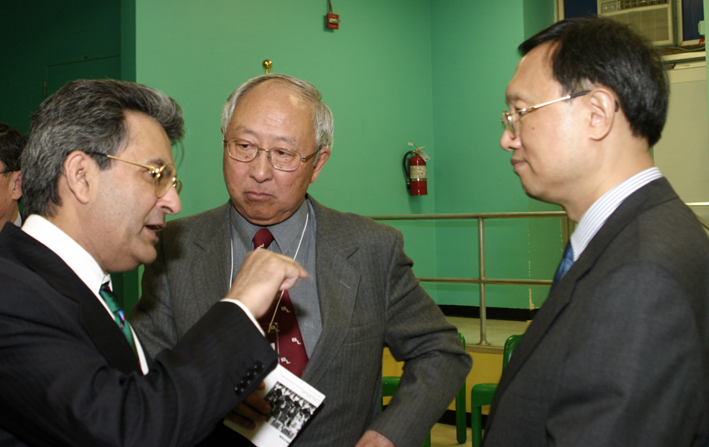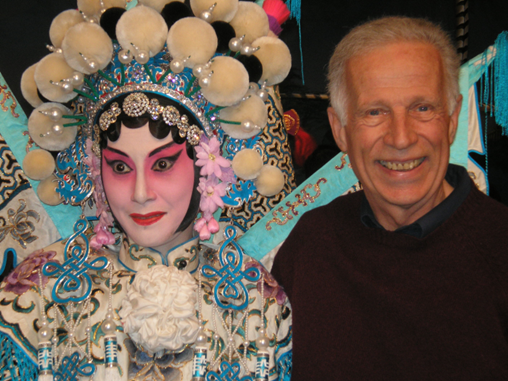
D.Paul Schafer and friend Yan Yan at Toronto Chinese Opera
ChatGPT provided this following summary of D Paul Schafer’s book ,“The Great Cultural Awakening”:
D. Paul Schafer’s The Great Cultural Awakening delves into the transformative potential of culture in addressing the world’s pressing challenges, such as environmental degradation, economic inequality, and social fragmentation. Schafer argues that society’s extreme focus on economic growth and materialism has led to unsustainable development and global crises. He advocates for a cultural shift, where the values of empathy, creativity, and sustainability take precedence over mere economic gain.
Schafer presents culture as a holistic concept that includes not just the arts, but also education, science, and community, emphasizing their collective role in shaping societies. He believes that by embracing cultural values, humanity can move toward more equitable, peaceful, and environmentally responsible ways of living.
At the heart of his thesis is the idea that a “cultural awakening”, a renewed understanding and appreciation of diverse cultural expressions and values—can inspire a more balanced and humane world. He calls for governments, institutions, and individuals to prioritize cultural developments and policies and to nurture a sense of global citizenship rooted in shared cultural heritages and experiences.
In short, Schafer envisions a future where cultural awareness leads to a harmonious coexistence, fostering unity in diversity and prioritizing the well-being of all people, countries, and the planet as a whole.
________________________________________
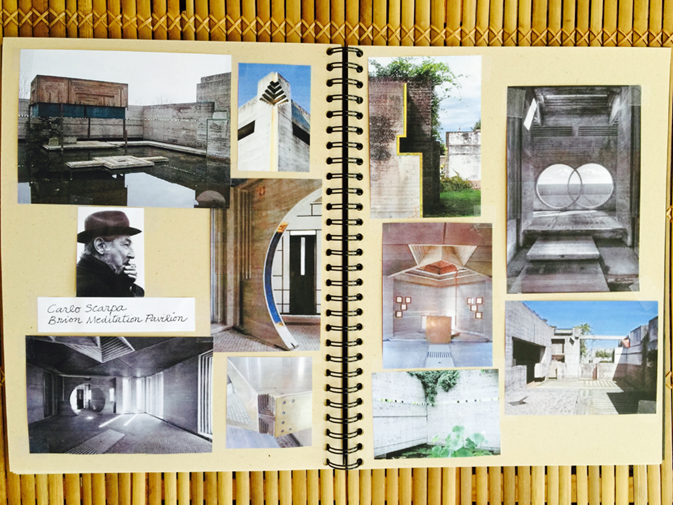
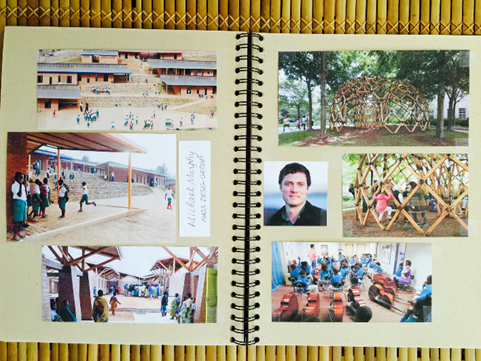
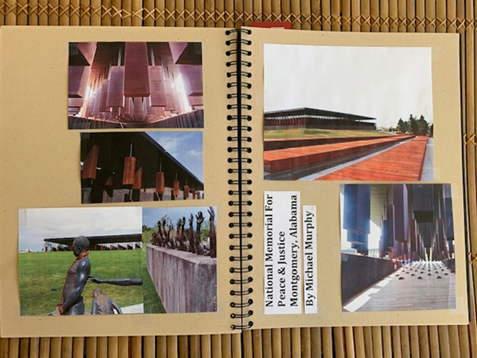
Few days ago, Paul. Schafer sent me a 27page article titled: “CREATING PORTRAITS OF COUNTRIES’ CULTURES IN THE HOLISTIC SENSE TO ENHANCE WELL-BEING AND COME TO GRIPS WITH THE WORLD’S MOST DIFFICULT PROBLEMS” It emphasized many of his concepts from his “THE GREAT CULTURAL AWAKING” book, but this article talked more about Arts, Heritage, the power of SYMBOLS, and PORTRAITS Of CULTURES with HOLITIC VALUES and UNDERSTANDING – and shared much of his love and knowledge about Spain and its culture which ca n be used as a prototype sample. As a retired Architect, now focusing on https://Friendshipology.net, I am particularly interested in learning more about Cross-Cultural Bonding and Interconnecting, and I was quickly attracted to the following passages from his writing:
“As culture and cultures play a more prominent role in the world due to the great cultural awakening that is going on in many countries, treating organizations as cultures, and many other factors, it is possible to experience a real “paradise on earth” as well as come to grips with some of the world’s most difficult problems by creating portraits of countries’ cultures as wholes and ways of life using some of their most characteristic parts as symbols.”
“Of all the parts of cultures that are available to us, the arts in general and artists and arts organizations in particular play a quintessential role in this holistic process by providing many of the symbols that are necessary to unlock the secrets of cultures in all different geographical levels. Artists use the most characteristic parts of cultures as symbols to convey crucial information about cultures. Since artistic works, like culture and cultures, are also wholes made up of many parts, artists and arts organizations understand this process and possess the knowledge, sensitivity, expertise, and sensorial skills – as well as expressive abilities and communicative capabilities – that are needed to sense and feel how cultures are put together and function as dynamic and organic wholes.
“The old adage “a picture is worth a thousand words” is a cliché, but it speaks volumes about the ability artists possess to create the symbols that are necessary to come to grips with this problem, and in so doing, pass on an incredible amount of information and valuable insights into the holistic character of cultures that can’t be communicated in any other way at all.”
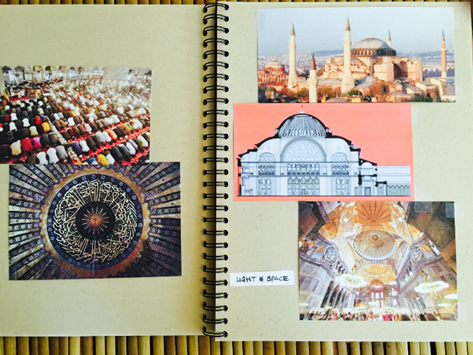
“One of the best examples of using the parts of cultures to produce this symbolic effect for the culture of a country was Gandhi’s use of “homespun” and “salt” – two of India’s most characteristic parts and precious assets – as powerful symbols to portray the character of the culture of India as a whole and way of life that eventually brought an end to British rule in India. And what is true for these two symbols and the culture of India is also true for the cultures of all countries and some of their most relevant symbols as well, such as the Statue of Liberty and American culture, the Great Wall and the culture of China, Angor Wat and Cambodian culture, and myriad others. This is also true for cultures at all other geographical levels, be it at the neighborhood, community, town, city, rural, and regional level. Think, for example, of such symbols as the Guggenheim Museum in Bilbao, the Coliseum in Rome, the Hagia Sophia and Blue Mosque in Istanbul, Stonehenge in a “stand alone” area in England, and numerous others that communicate a great deal about the character of the places and cultures they epitomize. Not only are these parts well known in the cities, places, and countries where they are located, but also, they are well known in many other countries and parts of the world as well.“
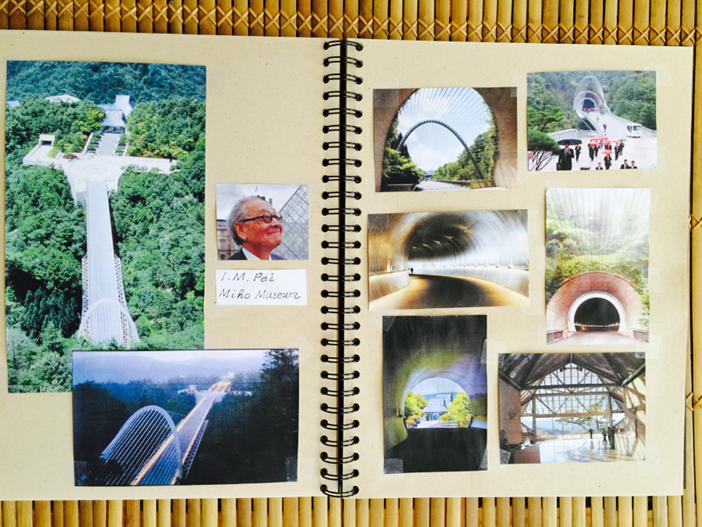
“The architect Ieoh Ming Pei emphasized this holistic ability best by using architectural creations as symbols for something much greater and grander when he said: “Architecture is the very mirror of life. You only have to cast your eyes on buildings to feel the presence of the past, the spirit of a place; they are the Reflection of Society.“
“Parts like this and countless others can be used in much the same way to create and build portraits of the cultures of communities, towns, cities, rural areas, regions, and countries that are very “symbolic” or “representative” of these cultures in the holistic sense.”
“It is important to emphasize here that any part of a culture can fulfill this holistic function and purpose if they possess or are accorded this symbolic status. This manifests itself most obviously in all the different arts forms – performing, exhibiting, literary, architectural, cinematographic, culinary, ceremonial, environmental, horticultural, culinary, and so forth in general, and music, paintings, plays, photographs, poetry, films, videos, dances, stories, poems, cathedrals, mosques, synagogues, civic squares, festivals, fairs, parades, food, and so forth in particular. Parts can also be used to convey crucial information about important historical and contemporary events, such as Tchaikovsky’s 1812 Overture and Don McLean’s American Pie that sheds light on the plane crash that occurred in the United States on February 3, 1959 and killed three popular singers – The Big Bopper (J.P. Richardson, Jr.), Buddy Holley, Ritchie Valens – and several others.”
“This is also true for countries’ national flags and anthems and even more so, which explains why many people get so upset when people trample on their flags or laugh, talk, or sit during the playing of their anthems. However, this symbolic capability is also true for revered athletes such as Pelé and Brazilian culture and Messi and Argentinian culture, animals such as kiwis and New Zealand culture, flowers such as tulips and Dutch and Turkish cultures, sunflowers and Ukrainian culture, oak and cherry trees and British and Japanese culture, grapes, olives, wine, beer, and other beverages and many European and North and South American cultures, and rice and most Asian cultures.”
“This is also true for natural resources such as lakes, mountains, forests, and most notably rivers that can also be used for this symbolic purpose. This is manifested in the ability some composers have to create musical works or portraits based on elements taken from nature that are symbolic of something much greater and possibly even the entire way of life of people and their countries’ cultures as wholes. An excellent example of this is Smetana’s musical masterpiece The Moldau, or what is called Vltava in Czechia or the Czech Republic. This musical composition is about the remarkable river that flows majestically from its origins in the mountains of a Bohemian forest, meanders leisurely through the Czechia countryside, and finally arrives at its destination Prague, the country’s capital. It is a very patriotic work that captures Smetana’s love for his country or homeland, history, and fellow citizens. It was completed in 1874, performed in 1875, and is the second movement of his six-movement monumental magnum opus Ma Vlast (My Country).”
“Rivers such as the Moldau and many others have been a favorite subject and symbol of composers for a long time. This is probably because water is one of humanity’s and the world’s most precious assets – if not the most precious – and rivers have a great deal to do with movement and flow that are basic elements at all stages in life and all species.”
“Other well-known examples of how rivers have been depicted by composers in this symbolic sense are The Blue Danube by Johann Strauss Jr., Flow Gently, Sweet Afton by Robert Burns and Jonathan Spilman, The Yellow River Piano Concerto by Yin Chengzong and Chu Wanghua’s based on Xian Xinghai’s Yellow River Cantata, and such well-known American favorites as Ol’ Man River and “Sketches on Shenandoah” by Peter Boyer.”
“Interestingly, many composers have used folk music for a similar purpose, such as Zoltán Kodály and his Variations on a Hungarian Folk Song and Dances of Galanta, Bêla Bartók and his Romanian Folk Dances for String Orchestra, and George Enescu and his popular Romanian Rhapsodies. It all depends on what symbols are required most in order to reveal the character of countries’ cultures in the all-embracing sense.”
“THE POWER AND POTENTIAL OF SYMBOLS They manifest themselves in specific places, cases, and situations. An excellent example of this is the Olympic Games that took place in France and Paris in 2024. Not only was the culture of France as a whole and way of life epitomized at these Games through the skillful use of the country’s captivating capital Paris – also known as the “City of Light” – but also the Eiffel Tower was used in a very similar fashion as one the most obvious and cherished symbols of the culture of France and Paris. “
“Interestingly, the Eiffel Tower also conveys a great deal about the Cultural Paradise that exists on earth due to its universal appeal and significance committee of the Games for this specific purpose. Not only did it fulfill this purpose admirably since it epitomized the magnetic attraction of the cultures of both France and Paris in the all-encompassing sense, but also it epitomized the Games through the Tower’s ability to inspire athletes to reach for far greater heights in the hope of winning gold, silver, or bronze medals as symbols of their rigorous training schedules, strenuous efforts over many years, and outstanding accomplishments”
“Overall, their purpose is to enhance people’s knowledge, understanding, appreciation, and respect for their own culture and cultures, the cultures of other countries, and foster peace, harmony, happiness, fulfillment, and well-being in the world and in life.”
“It is essential to point out here that the number of symbols needed in any specific situation depends primarily on the types of cultures and countries involved in this symbolic process. If countries’ cultures are extremely diverse, many more symbols will be required than if cultures and countries have fewer differences and more similarities. Added to this is the fact that symbols can come from any source and don’t need to be well-known or famous to serve a valuable purpose in exploring and exposing a culture’s character.”
“In recent years, no person has contributed more to America’s and the world’s understanding, awareness, and appreciation of this remarkable parts-whole process and symbolic phenomenon than the American documentary filmmaker Ken Burns. In making his films, Burns has demonstrated an uncanny knack for selecting specific parts of American culture and the American way of life that are not only symbolic in their own right, but also highly representative of American culture and the American way of life as a whole. This is especially true for such documentary films as The Civil War, Jazz, Country Music, Jackie Robinson, Baseball, The Roosevelts, The Statue of Liberty, and The National Parks: America’s Best Idea. It is impossible to watch any of these films without learning a great deal about Americans as people, United States as a country, and American culture as a whole and distinct way of life. By selecting these topics and connecting their carefully crafted parts as symbols, Burns illustrated how it is possible to produce a far more comprehensive portrait of American culture that goes right to the heart and soul of what the United States, its culture, and way of life are really all about.”
“It is imperative to state another essential point here. It should be noted that symbols can be used for nationalistic purposes that are positive or negative. When symbols are used in nationalistic and constructive ways, they can accomplish a great deal in terms of enhancing people’s and countries’ national identity, sense of belonging, and pride of place. However, when they are used for nationalistic and destructive purposes, as has often been the case over the course of history, they can be used by dictators and oppressive regimes to control and manipulate people, countries, and cultures for their own diabolical ends. Clearly, symbols should only be used for positive purposes, as well as activities and ideals that are beneficial, helpful, and indeed inspirational.”
CREATING PORTRAITS OF COUNTRIES’ CULTURES
I have selected the culture of Spain as a prototype example for this demonstrative purpose. I have done this because I have spent a great deal of time exploring the many different regions of Spain over the course of my life and believe from my experiences with this culture and the cultures of other countries I have explored or studied that there are many advantages to be derived from using the culture of Spain for this purpose, especially as there are many powerful symbols that reveal and confirm this.”
“There is no doubt that Music is one of these symbolic parts – if not the most symbolic part – of the culture of Spain as a whole. This musical tradition began in Spain many centuries ago and continues to captivate millions of people and organizations in Spain and many other parts of the world today. Several Spanish composers, for example, were well-known during the Renaissance, such as Cristóbal de Morales, Tomás Luis de Victoria, and others. However, the music of Spain is manifested most profusely in symbolic terms by Flamenco music, which originated in the Andalusian region of southern Spain following the arrival of the Moors in 711 and the dominant role they played in the southern and central regions of Spain for many centuries after this. Since that time, many Flamenco singers, dancers, guitarists, violinists, and cellists have become well-known in Spain and other parts in the world, such as singers Pastora Pavón (La Niña de los Peines), José Monje Cruz (Camarón de la Isla), Estrella Morente, and Carmen Pacheco Rodríguez (Carmen Linares), dancers Carmen Amaya Amaya, Sara Baras, and Rafael Amargo, guitarists Carlos Montoya, Paco de Lucía, Vincente Amigo, and Andrés Segovia, violinist Pablo de Sarasate, cellist Pablo Casals; and numerous others.”
“ In classical terms, many distinguished Spanish composers have composed music that is very symbolic of Spain and its culture, including Isaac Albéniz and Asturias and Iberia Suite, Manuel de Falla and Noches en los Jardines de España (Nights in the Gardens of Spain), Enrique Granados and Goyescas, Pablo de Sarasate and Zigeunerweisen (Gypsy Airs), Danzas espanōlas (Spanish Dances), and Fantasia de Carmen (Carmen Fantasy for violin, piano, and orchestra based on themes from Bizet’s opera Carmen), Joaquím Rodrigo and his remarkable Concierto de Aranjuez, Concierto Andaluz, and Fantasia para un gentilhombre (Fantasy for a Nobleman), Francisco Tárrega and Recuerdos de la Alhambra, and many others. This is probably why Plato claimed in his famous book The Republic many centuries ago that “Music is a moral law. It gives soul to the universe, wings to the mind, flight to the imagination, and charm and gaiety to life and to everything.” One of the highest tributes that can be paid to the music of Spain is the fact thatmany composers from other countries have been captivated – mesmerized might be a better word – with this music as well. This goes back many centuries. When Miguel de Cervantes’ literary masterpiece Don Quijote de la Mancha (Don Quixote) was published in Spain between 1605 to 1615 – which countless authors and historians claim is the most important non-fiction book in the world and the first real novel ever written.”
“A composer who became totally obsessed with Cervantes’ famous book and its contents was the German composer Georg Philipp Telemann, Like Telemann, there were many other composers who were not Spanish or born in Spain but nevertheless produced musical works that are characteristic of Spain and its culture. Included here are such well known composers as Luigi Boccherini, who was actually born in Italy but spent most of his life in Spain and wrote Del Fandango (Fandango, Quintet in D. major, No. 4, G. 488) and Musica notturna delle strade di Madrid (Nocturnal Street Music of Madrid), composers from France such as Édouard Lalo who wrote Symphonie espagnole and Danse espagnole, Emmanuel Chabrier who wrote Espagñe, and Maurice Ravel who wrote Boléro (Bolero), as well as Nikolai Rimsky-Korsakov from Russia and his popular Capriccio espagnol (Spanish capriccio). Seldom, If ever, have so many composers from other countries been totally carried away by the music and culture of another country and composed music about it. What a great tribute.”
“These well-known musical works can be augmented and enhanced considerably by adding numerous paintings by such talented Spanish artists as Diego Velázquez and his Las Meninas (Royal Members of Society) (12), Salvador Dali and La Persistencia de la Memoria (The Persistence of Memory), El Greco and El Entierro del Conde de Orgaz (The Burial of the Count of Orgaz), Francisco Goya and La Maja Desnuda (Naked Gypsy/Venus) and La Maja Vestida (Clothed Gypsy/Venus), Pablo Picasso and his famous painting Guernica, and numerous others.”
“To this list should also be added many well-known Spanish authors and poets, often referred to as “masters of the pen, prose, and poetry.” In addition to Miguel de Cervantes and his precious literary achievements much earlier, over the past centuries there have been many other literary masters and poets such as Juan Ruiz, Lope de Vega, Rosalía de Castro, Benito Pérez, Galdos Juan Ramón Jiménez, Federico García Lorca, Jorge Luis Borges, and many others. To this list should be added highly representative architects, architectural achievements, and symbols including the Alhambra in Granada, Toledo Cathedral, the Meziquita Mosque in Cordoba, Burgos Cathedral, the Museo National del Prado, Paseo del Prado in Madrid, and especially several of Giovanni Antoni Gaudi’s controversial architectural creations, most notably Case Batlló, Park Güell,La Pedrera, Casa Milà, and especially Basicilia della Sagrada Familia.”
“Caping off and celebrating this precious architectural feast would undoubtedly be the Plaza de Espagña situated in the Parque de Maria Lucia in Seville. This Plaza was built in 1928 for the Ibero-American Exposition of 1929 and is a landmark symbol of the regional character of architecture of Spain that mixes together parts of the Baroque, Renaissance, and Moorish (Mudégar) traditions and styles. The Parque is designed in the “Moorish paradisical style” with a half mile of tiled fountains, many pavilions representing the diverse regions of Spain – each with a pavilion of its own covered with very specific and symbolic ceramic-colored tiles – as well as ponds, beaches, palm, orange, and pine trees, and lush flower gardens. All these artistic wonders and powerful symbols and many others like them make it possible to conjure up and create a “musical, visual, literary, and architectural portrait of the culture of Spain” capable of making a major contribution to broadening and deepening the overall portrait of Spain as a country, its people, and its culture as a whole through its many powerful symbolic parts.”
“There are many other powerful symbols that are also very characteristic of Spain’s culture as a whole and way of life. Included here would undoubtedly be Quixote-type windmills, bulls, bullfights, culinary delicacies such as tapas, paella, sangria, sherry, churro, distinctive Spanish wines and olive oils, Camina scallop shells that are deemed to have “a special spiritual quality and value,” colourful fans, flags, and castanets, paseo or strolling, exquisite craft objects, special Spanish horses, magnificent gardens, El Cid (Spain’s Robin Hood for helping others and the poor), espadrilles or certain types of summer shoes, symbolic cities such as Madrid, Barcelona, Seville, Granada, Cordoba, Segovia, Burgos, Santiago de Compostela, Salamanca, Zaragosa, and many others.”
“These symbols have evolved over many centuries, and many of them have resulted from interactions that took place in southern and central Spain following the arrival of the Moors in 711 and the dominant role they played in the Andalusian region during the “Golden Age” from 756 to 1031 that produced a very lively flowerings of the arts, sciences, technology, and other activities. This age was declared by the scholar Américo Castor in 1948 and confirmed by many other scholars and historians during and since that time that resulted in a great deal of peace, harmony, and happiness between Christians, Jews, and Muslins in Spain that has seldom occurred in history or other parts of the world. This was because these three groups set aside their religious conflicts and differences and experienced what is called “convivencia” or “coexistence” that was not only in the best interests of these three groups but also beneficial for all people and religions in Spain.”
“One of the most obvious illustrations of convivencia in historical terms was the marriage of Queen Isabella I of Castile (1451-1504) and King Ferdinand of Argon (1452-1516) and the joint rule of these two heroic leaders that sealed the de facto unification of Spain as a country and no longer separate regions (a major feature in the creation and development of Spain as a country and culture as a whole). These two outstanding leaders jointly and successfully governed the country and acted as a powerful symbol of gender equality that seldom occurred in the world at that time and for many centuries later.”
“Thanks to many contemporary technological developments such as films, television, recordings, and videos in earlier times and social media networks, technological advances, and digital devices more recently, it is now possible to enhance this emerging portrait considerably by exploring and experiencing many other important dimensions of Spain’s culture and appreciate its many cherished cultural achievements and symbols over the centuries. This can be enlarged and enriched considerably by flying over Spain in a virtual sense and viewing its geological and geographical features, diverse regions, and cultures in visual terms in some detail (this is now possible for most other countries’ cultures in the world today), and taking virtual tours of Spain’s art galleries, museums, cathedrals, mosques, castles, libraries, palaces, festivals, fairs, and especially walking tours through the streets of its many enticing towns and cities at any time of the day or night or at any age in life to form a general impression of how the country’s public and private institutions and political, legal, economic, communications, and transportation systems function. These contemporary achievements are equally phenomenal and should be recognized and used rather than ignored, especially with respect to Spain’s highly effective social security system and impressive automotive, medical, technological, chemical, shipbuilding, and textile exports. Added to this is the ability of Spain to achieve a fine balance between the forces of centralization and decentralization as well as relationships between many different types of people and groups, thereby reducing some of the polarizations, divisions, and conflicts this can and often do arise from this.”
“As indicated earlier, regions have always played an extremely important role in the cultural development of Spain over the centuries and still do today. As Anna Villarroya and Pedro Rothstein pointed out in their recent article, The Integration of Cultural Rights in Spanish Cultural Policies: Spain is a highly decentralized, quasi-federal country, where regional authorities have taken over most of the responsibility for culture…. In 2021, the majority of public cultural expenditure in Spain came from regional and local governments, which together represent 85% of public cultural spending. This decentralized nature of Spain’s political model has favored the adoption of different models for cultural policies. One of the most recent outstanding aspects is the adoption of different initiatives (e.g. legislative plans, and changes in structures) in the area of cultural rights at the state level, as well as in different Spanish regions.”
“To be fully exercised, Cultural Rights must be taken into account in cultural policy making on all levels, including legal instruments for their protection and implementation…. Defending a cultural rights approach entails a rearticulation of human rights and freedoms towards a more democratic, equal, and inclusive society for all citizens.”
“It is clear from this evolving portrait that the more parts and symbols such as these and many others are added and used, the more this portrait expands, is enhance, and begins to manifest what this culture as a whole and way of life is really all about, designed to accomplish, operates on a daily basis, and reveals itself to the world in very specific and meaningful terms.”
“Over the centuries, Spain has learned through bitter experiences with different ethnic and racial groups, the Inquisition at home, and colonization abroad, and other tragic events that the arts, humanities, and heritage of history have a powerful role to play in manifesting the country’s true cultural character and identity, why inclusion, integration, and cooperation are much better than exclusion, isolation, and competition, and artistic, scientific, and humanistic values and ideals are much better than division, conflict, confrontation, and war. It is not coincidental in this regard that Federico Mayor, former Director-General of UNESCO and a well-known scientist, educator, poet, and diplomat in Spain and elsewhere in the world, created the Fundación Cultura de Paz (Foundation of a Culture of Peace) in Madrid in 2000 for this very specific reason.Hopefully, this much more expansive portrait of the culture of Spain as a whole andway of life will help people and organizations in other countries in the world to createsimilar portraits of their cultures in holistic terms, be they in Africa, Asia, South America,North America, the Caribbean, Europe, the Middle East, or elsewhere in the world. “
“What should constantly be borne in mind in creating and using portraits like this and many othersis that this is not only possible at the national level, but also at all other levels.While portraits like this are very helpful for people and countries in all parts of theworld in experiencing the cultural paradise that exists on earth and realizing all the joy,happiness, and fulfillment that can come from this, there are many other essential uses ofthese portraits and this remarkable parts-whole process and symbolic phenomenon.”
__________________________________________
Short bio for D. Paul Schafer <wwwWorldCultureProjects.org>
D. Paul Schafer is a Canadian cultural scholar, educator, and author with extensive experience in economics, the arts, culture, cultures, and cultural development and policy. He has spent over 50 years working on understanding culture and cultures, cultural policy, global sustainability, and the role of culture in human and societal development. Schafer is the founder and director of the World Culture Project (www.worldcultureproject.org) in 1989 and has authored many books, including The Age of Culture, Revolution or Renaissance, and The Great Cultural Awakening. His work advocates shifting toward a culture-centric perspective in addressing global challenges, emphasizing the importance of integrating culture and cultures into all aspects of life and living for the well-being of individuals, countries, societies, and the world. Two of his books – Culture: Beacon of the Future and Revolution or Renaissance: Making the Transition from an Economic Age to a Cultural Age have been translated into Chinese and published by the Social Sciences Academic Press in Beijing He resides in Markham, Ontario with his wife Nancy and has been active with both the Chinese Opera of Toronto and several Taichi Groups.
____________________________________________