With wandering thoughts, Billy clicked on ChatGPT to explore ideas. So far he has found ChatGPT very helpful, indeed. The below are the Questions he posed:
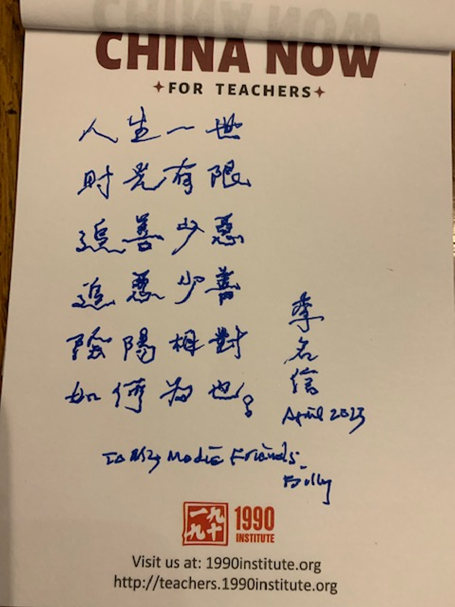
Can Yin & Yang , Extreme Opposites Co-Exist – How ?
What Turns People Bad? What Turns Them Around ?
Stories On Misguided Persons Turn Good and How.
Stories On How Certain Catalysts Help Transform People.
______________________________________________________
ChatGPT’s Replies below:
Can Yin & Yang, Extreme Opposites, Basic Ideologic Differences Co-Exist? How can we? – Billy Asked
ChatGPT
Yes, Yin and Yang, representing extreme opposites and fundamental ideological differences, can indeed coexist. The concept of Yin and Yang originates from Chinese philosophy and represents the dynamic interplay and balance between opposing forces. It suggests that opposing elements are not mutually exclusive but are interconnected and necessary for the existence of one another.
To foster coexistence and balance between extreme opposites or ideological differences, here are a few suggestions:
- Acknowledge the interdependence: Recognize that extreme opposites or ideological differences are not isolated entities but are part of a larger system. Just as Yin and Yang complement each other, understanding the interdependence between opposing ideas can lead to a more harmonious coexistence.
- Seek common ground: Despite differences, there may be areas of common interest or shared values. Identifying and focusing on these commonalities can create a basis for mutual understanding and collaboration. It allows for constructive dialogue and finding solutions that accommodate diverse perspectives.
- Practice empathy and active listening: Empathy plays a crucial role in understanding others’ viewpoints, even if they differ significantly from your own. Practice active listening by genuinely seeking to understand the underlying reasons and emotions behind opposing ideas. This can foster empathy and open the door for productive conversations.
- Embrace diversity: Recognize the value of diversity and the richness it brings to society. Embracing diverse perspectives can lead to innovative solutions and a more comprehensive understanding of complex issues. Encourage inclusivity, respect, and tolerance for different viewpoints.
- Constructive dialogue and compromise: Engage in constructive dialogue where ideas are exchanged, and thoughtful arguments are presented. Create an environment where compromise is seen as a strength rather than a weakness. Finding middle ground or alternative solutions that incorporate elements from both extremes can foster coexistence and balance.
- Focus on shared goals: Identify common objectives that can unite individuals or groups with opposing ideologies. By directing attention to shared goals, the focus shifts from differences to collective aspirations. This shared purpose can facilitate cooperation and coexistence.
- Education and awareness: Promote education and awareness about different perspectives and ideologies. Encourage critical thinking, dialogue, and understanding within educational institutions, communities, and society at large. This helps break down stereotypes and fosters an atmosphere of acceptance and mutual respect.
Remember that coexistence does not necessarily imply agreement or the elimination of differences. It means creating an environment where diverse ideas can peacefully coexist, enriching society with their unique contributions.
___________________________________________________
What Turns People Bad – Lust. Greed. Power, Anger, Jealousy, etc. etc. ? What turns some Around ?
ChatGPT
There are numerous factors that can contribute to individuals exhibiting negative behaviors or becoming “bad.” While it is important to note that human behavior is complex and multifaceted, several common factors are often associated with the development of negative traits or actions. Here are a few examples:
- Personal experiences: Traumatic experiences, abuse, neglect, or significant emotional events can shape a person’s behavior. These experiences can sometimes lead individuals to adopt negative coping mechanisms or develop a negative worldview.
- Environmental influences: Surrounding environments, such as a dysfunctional family, negative peer groups, or exposure to violence and crime, can have a profound impact on a person’s behavior. Growing up in an unhealthy or toxic environment can contribute to the development of negative traits.
- Psychological factors: Certain psychological conditions, such as antisocial personality disorder, narcissism, or psychopathy, may be associated with a higher likelihood of engaging in harmful or manipulative behavior. These disorders can affect an individual’s ability to empathize with others and regulate their own emotions.
- Societal influences: Cultural, social, and economic factors can also play a role in shaping behavior. Factors such as income inequality, discrimination, or societal norms that promote aggression or exploitation can contribute to negative behaviors in some individuals.
- Personal values and beliefs: Sometimes, a person’s personal values and beliefs can lead them to engage in negative actions. For example, someone driven by extreme ideologies or a skewed moral compass may justify harmful behaviors based on their beliefs.
It is important to remember that not everyone who experiences these factors will necessarily turn “bad.” Human behavior is influenced by a complex interplay of various factors, including individual choices and personal agency. Furthermore, individuals have the capacity for change and growth, and many can overcome negative influences or traits through self-reflection, therapy, and personal development.
___________________________________________________________
Stories On Misguided Persons Turned Good. How And What Helped ?
ChatGPT
There are numerous stories in literature, mythology, and real life that depict evil individuals who undergo a transformation and ultimately embrace goodness. While the specific circumstances and factors that lead to their change may vary, here are a few examples:
- Darth Vader/Anakin Skywalker (Star Wars): Anakin Skywalker starts as a promising Jedi Knight but is eventually consumed by the dark side of the Force and becomes Darth Vader, a Sith Lord. However, when confronted by his son, Luke Skywalker, and witnessing the Emperor’s cruelty, Anakin rediscovers his love for his son and sacrifices himself to save him. His love and the realization of the consequences of his actions help him find redemption.
- Severus Snape (Harry Potter series): Initially portrayed as a cold and malicious character, Severus Snape’s true intentions are gradually revealed throughout the Harry Potter series. It is ultimately disclosed that Snape had been working as a double agent to protect Harry Potter and thwart Voldemort’s plans. His love for Harry’s mother, Lily, fuels his change and his actions ultimately contribute to the defeat of Voldemort.
- Jean Valjean (Les Misérables): In Victor Hugo’s novel, Jean Valjean starts as a hardened criminal who served a lengthy prison sentence for stealing a loaf of bread. After being shown kindness by a bishop, Valjean is profoundly moved and decides to turn his life around. He adopts a new identity and dedicates himself to acts of compassion and charity, becoming a force for good in the lives of others.
- The Grinch (How the Grinch Stole Christmas): Dr. Seuss’ tale depicts the Grinch as a bitter and spiteful creature who despises Christmas. However, upon witnessing the joy and love of the WHO’s in Whoville, the Grinch experiences a change of heart. He realizes the true meaning of Christmas and transforms from a malicious character to one filled with kindness and generosity.
- Real-life examples: There have been instances where individuals involved in criminal activities or extremist ideologies have undergone personal transformations and turned away from their past actions. Factors that contribute to these changes can include personal reflection, encounters with empathetic individuals, education, therapy, spiritual or religious experiences, and finding a sense of purpose or belonging in a positive community.
These stories highlight that even the most seemingly irredeemable individuals can undergo a change of heart and choose a path of goodness and redemption. The catalysts for their transformation often involve experiences that evoke empathy, self-reflection, love, or exposure to alternative perspectives that challenge their previous beliefs and actions.
_____________________________________________________
Stories on “How” certain catalysts help transform people from thinking and doing Evil to Good.
ChatGPT
Once upon a time, in a small village nestled amidst lush green fields, there lived a young man named Ethan. Ethan was known throughout the village for his mischievous nature and cunning behavior. He would often manipulate others, causing conflicts and strife in the community. People feared and mistrusted him, as his actions seemed to serve only his selfish interests.
One sunny day, as Ethan wandered through the village, he stumbled upon an old bookstore tucked away in a quiet corner. Curiosity sparked within him, and he stepped inside, unaware of the transformative journey that awaited him.
Inside the bookstore, Ethan discovered a dusty old book with an intriguing title: “The Power of Compassion.” As he began to read, the words on the pages seemed to pierce through his callous exterior, touching the depths of his soul. The book recounted stories of individuals who had transformed their lives from darkness to light through the power of compassion and empathy.
Intrigued by these stories, Ethan decided to embark on a quest to understand and embrace compassion. He reached out to the village elders, seeking their guidance on how to change his ways. The elders, initially skeptical of his intentions, recognized his genuine desire for transformation and agreed to mentor him.
Under the guidance of the elders, Ethan started engaging in acts of kindness and selflessness. He spent time with the less fortunate, helping them in any way he could. He listened to their stories, shared their sorrows, and rejoiced in their triumphs. Through these experiences, Ethan began to understand the pain and suffering he had caused others and the power of compassion to heal. The villagers began to forgive him, realizing that everyone has the capacity for change.
News of Ethan’s transformation spread throughout the region, inspiring others to examine their own lives and consider the power of compassion. The villagers, once divided and suspicious, came together, recognizing the strength in unity and understanding.
Ethan’s journey from evil to good became a legend that was passed down through generations. His story served as a catalyst for change, reminding people that even the most seemingly irredeemable individuals have the potential for transformation when touched by the power of compassion.
And so, the village that was once marked by strife and fear became a testament to the profound impact that compassion can have on transforming the minds and actions of those who were once trapped in darkness.
CONCLUSION: Billy Learned : PROMOTE FRIENDSHIP – TAP THE POWER OF COMPASSION – IN THOUGHTS AND IN DEEDS.
__________________________________________________________________