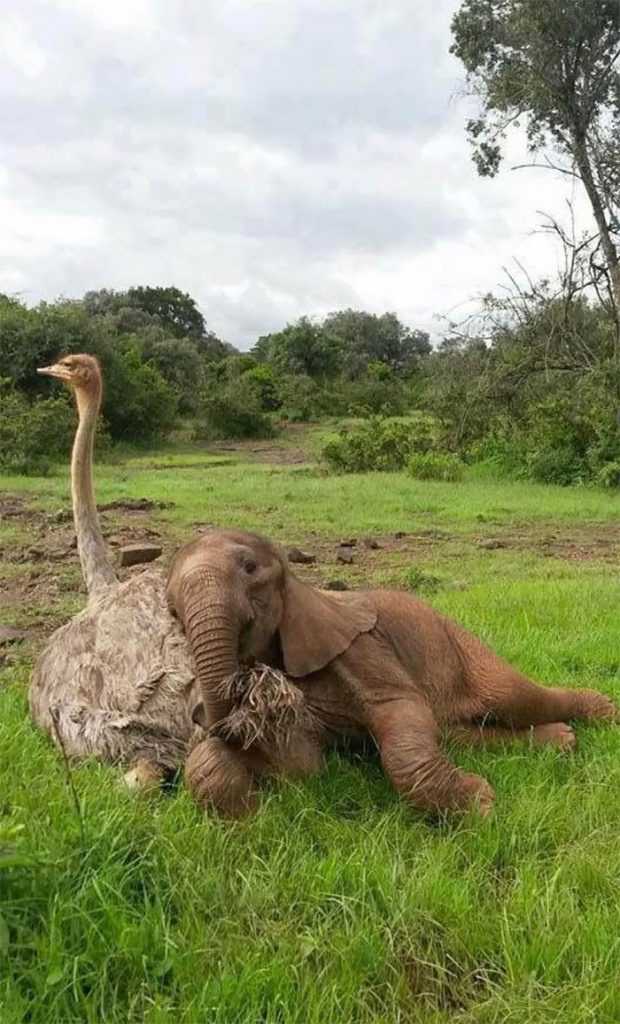
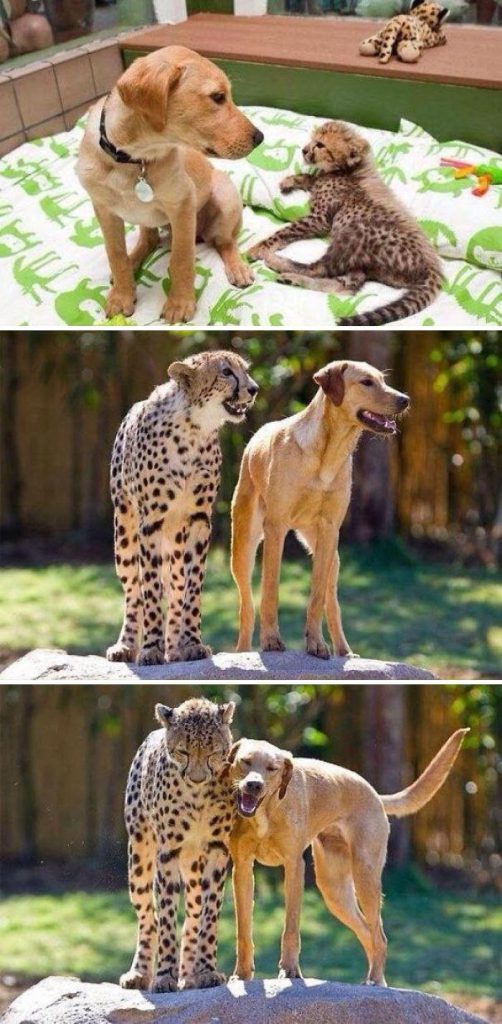
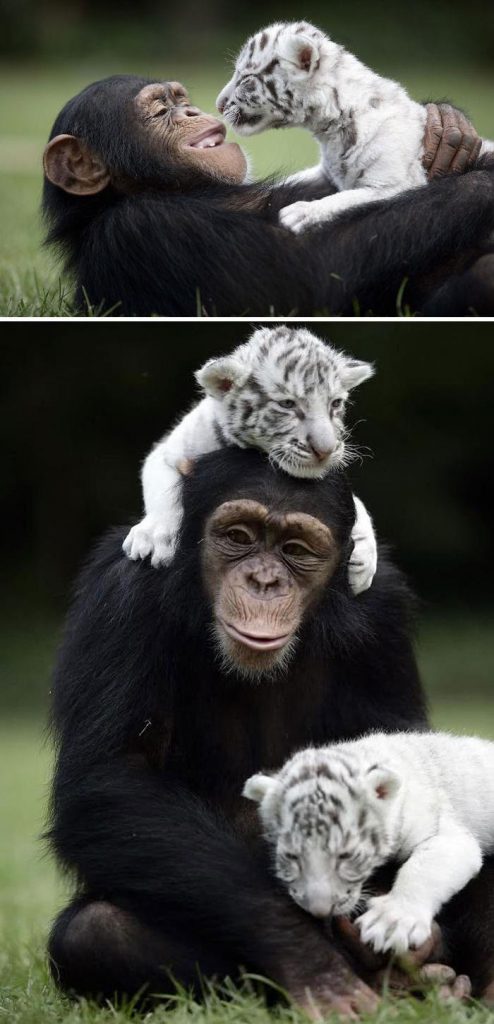
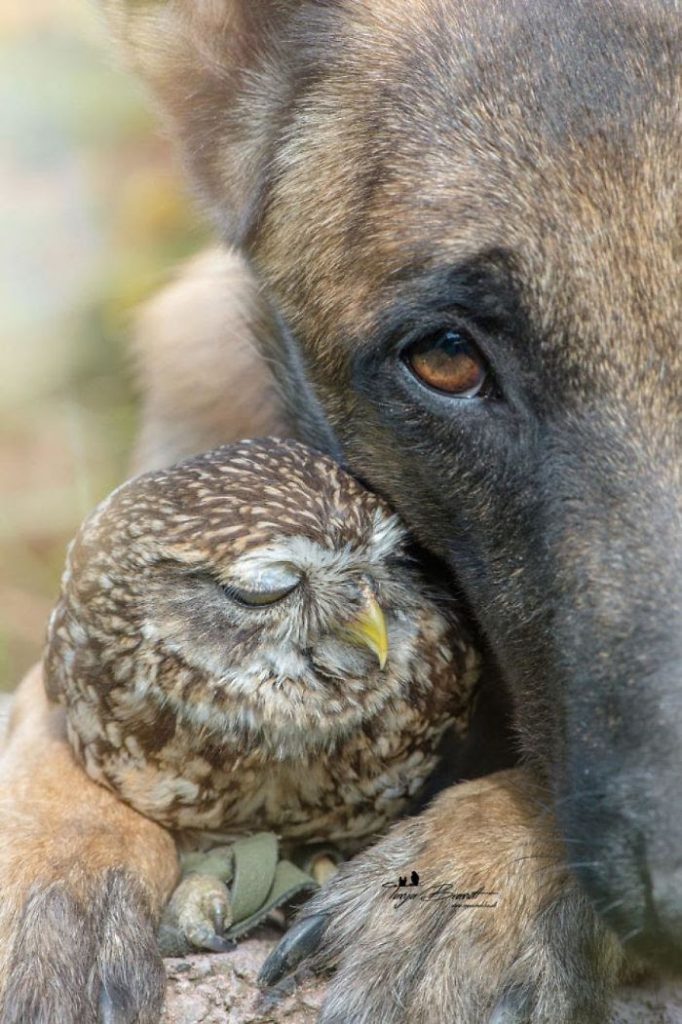
” FRIENDSHIP FOR MORE THAN HUMANS” photos sent by Dan Chao – January 2021

___________________________________________________________________
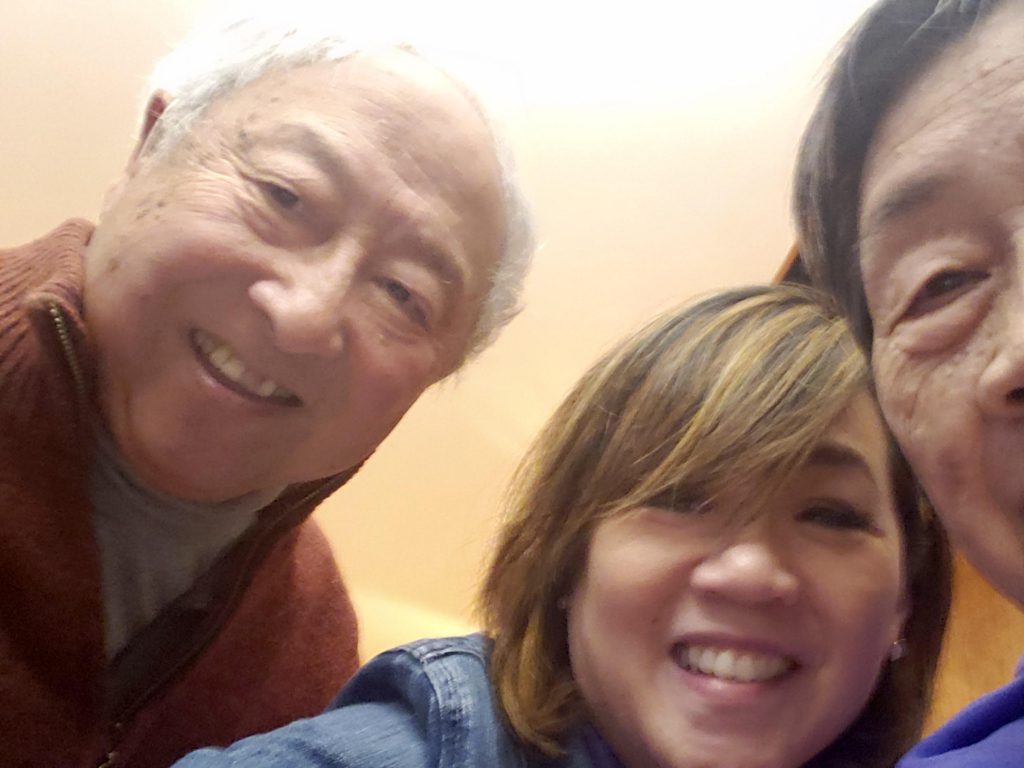
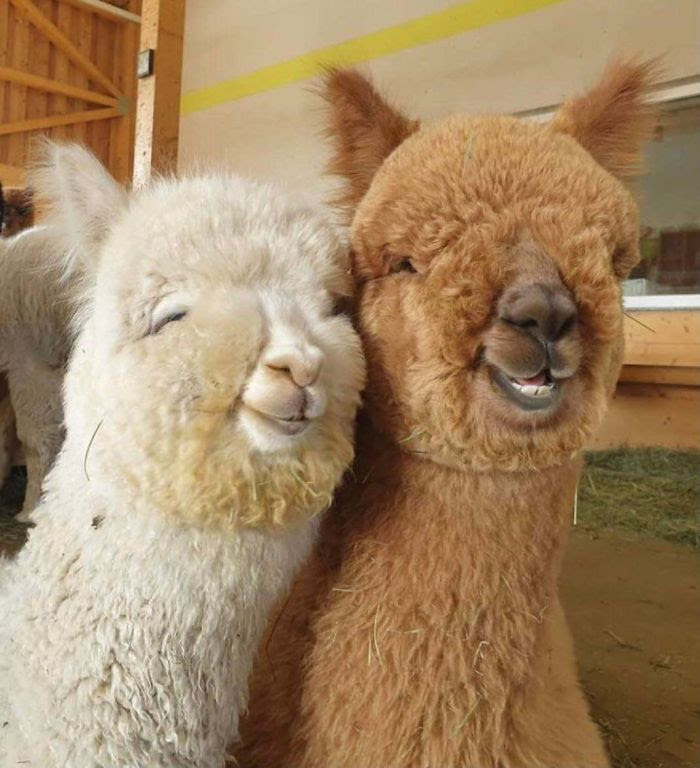
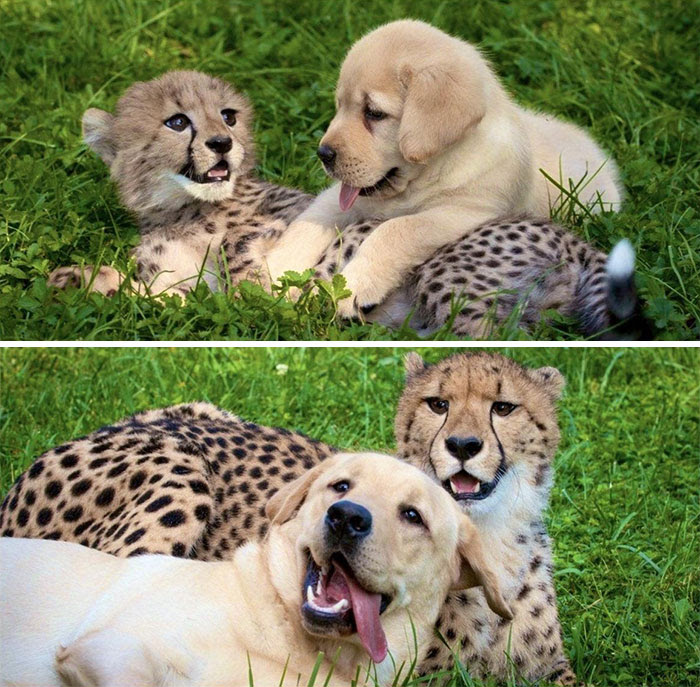
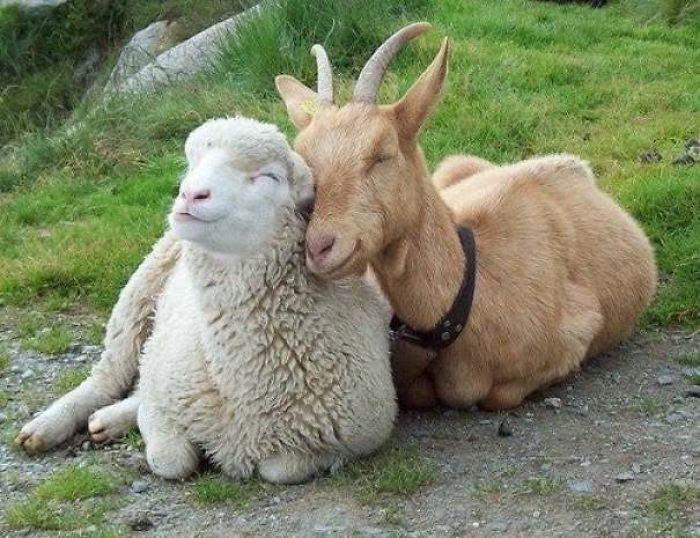
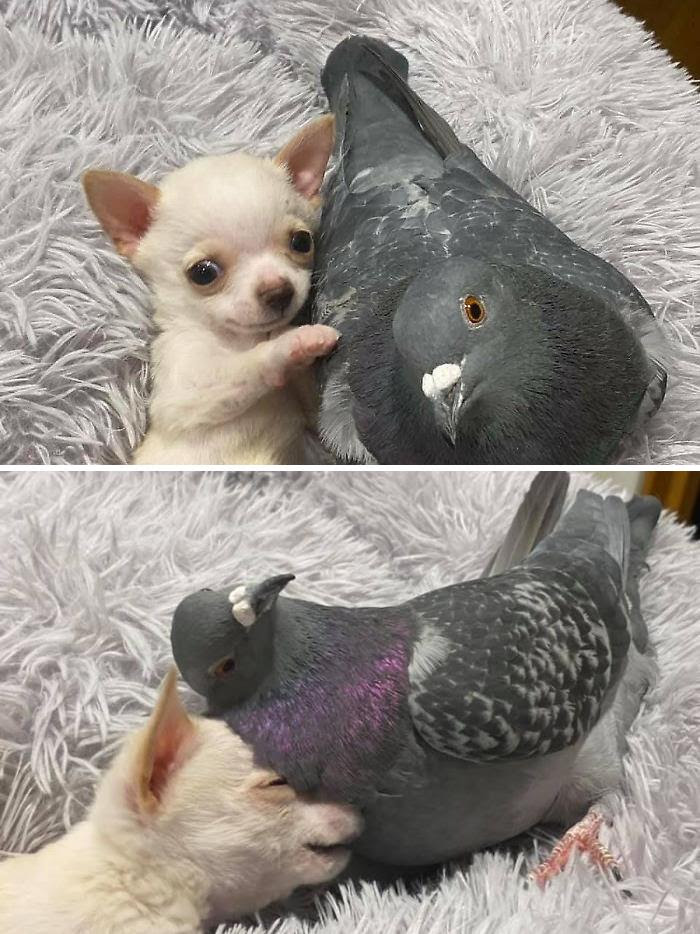
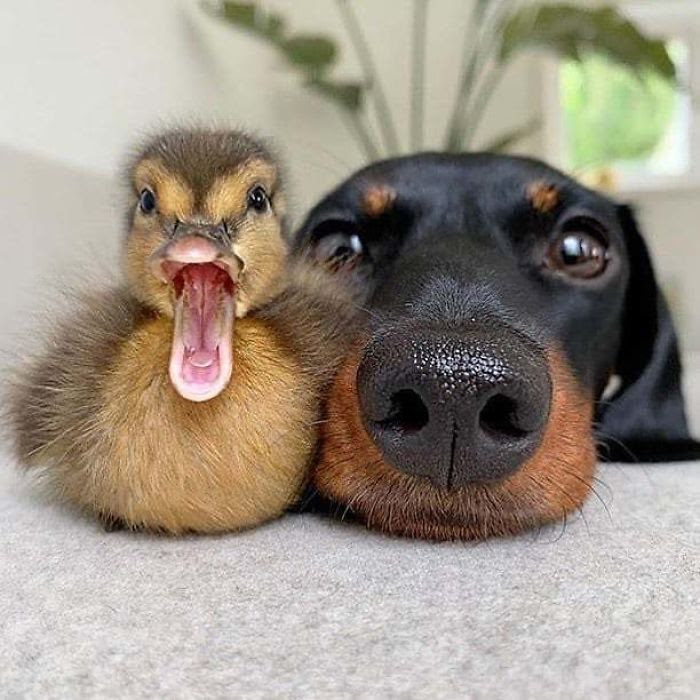
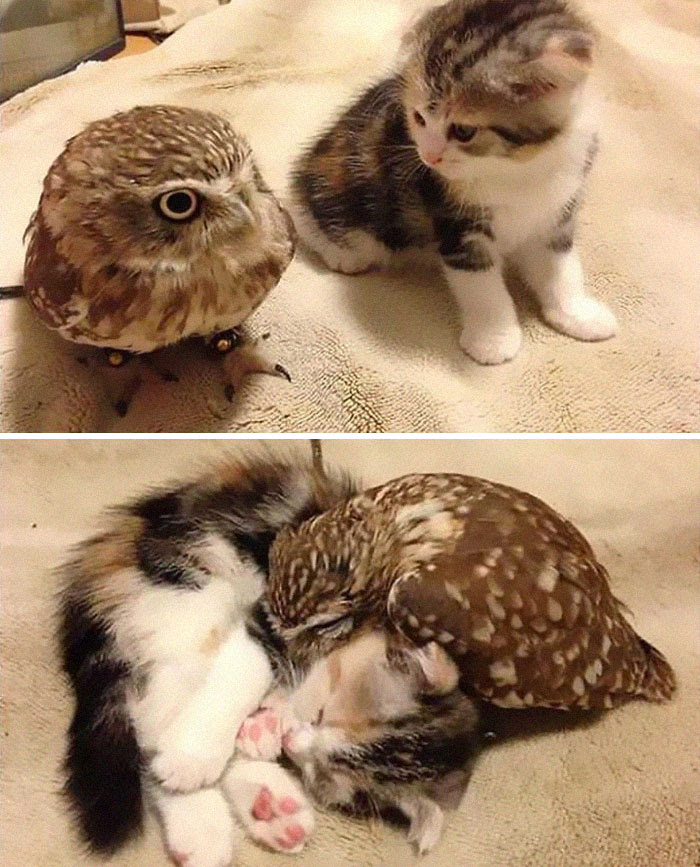
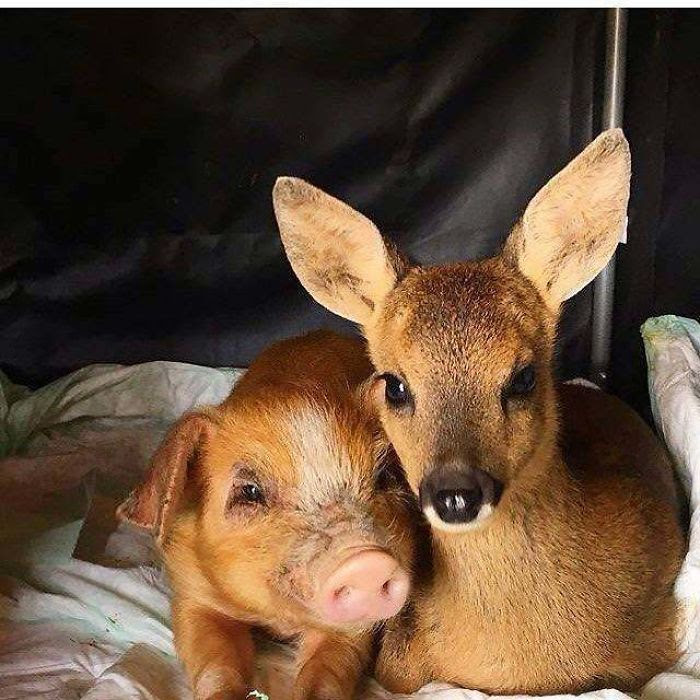
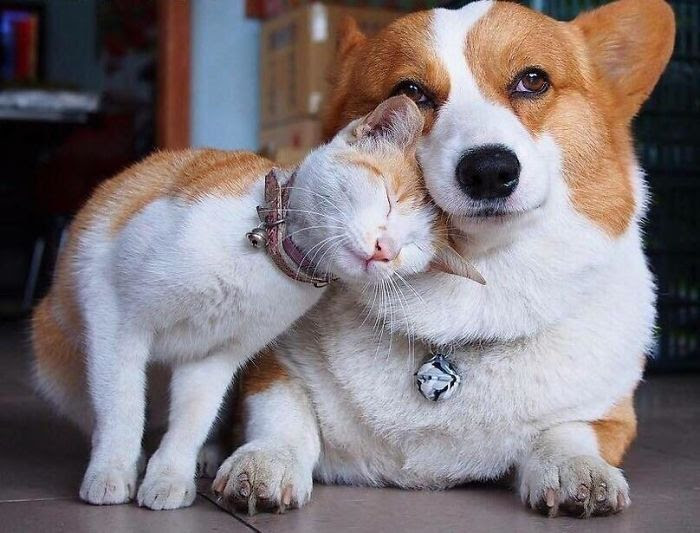
BILLY’S COMMENTS: Dan, you just showed us that LOVE & FRIENDSHIP ARE SO ESSENTIAL UNIVERSALLY. You also suggested that we Humans can learn from Animals. A picture is worth a thousand words, so I studied these photos a bit more carefully and noticed these many different pairs all appear to be peaceful, gentle, caring and truly happy together. I noticed that some even enjoyed being photographed together. Few apparently grew up together and thus are familiar with one other. Starting together young seems to help. Playing together to have fun is important. Some needs to be more patient like that monkey with the three pups. Hugging, leaning on each other, tet-a-tet together apparently build warmth and deepen bonding. Having full trust and feeling totally safe can be detected from the eyes of that owl and the wolfdog.

________________________________________________________
ABOUT DAN CHAO: Dr. Daniel K. H. Chao has over 40 years of experience in commercial and investment banking, corporate finance and management, company and project development, equity investments and risk management. He was a former SVP for TerraPower, chaired by Bill Gates, and was responsible for all business and financing activities for the company, which culminated in the formation of a joint venture with a leading nuclear power company in China.

Dr. Chao is also very active in non-profit organizations. He is currently the Board Chair of the 1990 Institute and a member of the Committee of 100 and of the National Committee for US-China Relations. Dan is also currently a Board member and Treasurer of Asian Health Services in Oakland, and an Advisory Board member of the Asia Society of Northern California. Dan has served on the Advisory Board of the Export-Import Bank of the United States, the Board of the US-China Business Council, the Advisory Council of the Fletcher School of Law & Diplomacy (Tufts U.), and was the former President and Chairman of the California-Asia Business Council. He has also served on the Board of Directors of the Head-Royce School in Oakland and the Pucheng Microfinance Development Association in Shaanxi, China. Dr. Chao holds a B.A. from Stanford University (Phi Beta Kappa), an M.A., M.A.L.D. and Ph.D. from the Fletcher School of Law and Diplomacy at Tufts University, and an Advanced Professional Certificate (Business) from New York University.

___________________________________________________________
“Friendship In Ladera” by Diane Gow – January 2021

Di – Diane Gaw

As someone who has lived in the small California community known as Ladera for more than 25 years, I sometimes feel like I am lucky to be stuck in a time warp.  The world around us has at times become disjointed and “self-first” focused, and yet, I don’t ever feel that way here.  We landed in Ladera quite by accident and over the years it has become astonishingly apparent to me that it is one of the luckiest events of my life. We were a young couple with 2 small children.  We moved here from the suburban life in Menlo Park, and I felt like we had landed in the Wild West. As people who took up residence in November, the first winter was pretty lonely. I felt completely isolated and cut off from the rest of the world. And then, like sunshine after rain, Spring came. The LRD pool opened and life as we knew it was forever changed.  We discovered other families who had small children. We met the neighbors. We visited the restaurants and unique shops at the bottom of the hill. And most importantly, lifelong friendships sprouted from that early seed.

I am convinced that this experience began 60 years ago when the first families moved in to this small planned unit development.  Those first families set the stage for those of who followed in their footsteps.  They established a recreation district to be the center of the neighborhood.  They created paths for wandering and had foresight to protect land around them.  The families had barbecues and street parties and July 4th activities that began traditions passed down through the ages.  And through those activities, families found friendship.  The Ladera kids all trudged to the Ladera school and played in the creek in the afternoons.  Couples formed pot luck clubs (at least one of which is still in existence). People took turns watching each other’s kids so they could have a night out. People in the neighborhood took on leadership roles at the LRD and in the community. And people cared about their neighbors.  Most families who now move to Ladera, move here because they want that sense of community and friendship.

I am blessed to have developed so many BFF’s (best friends forever) here in Ladera.

___________________________________________________
Diane Gow
Here’s a little bit about me.  I grew up in Marblehead, Massachusetts  and attended the University of New Hampshire. On a whim I followed my then boyfriend, now husband to California for what I thought would be 2 years.  35 years later I’m still in California.  I attended  Santa Clara University School of Law and practiced litigation for a few years before I was lucky to stay home with my 2 boys  and be part of their childhoods. We moved to our wonderful community of Ladera in 1995 and I’ve been actively involved in the neighborhood for the past 25 years.  I currently occupy the General Manager seat at the Ladera Recreation District and I moonlight as an assistant to Ladera Crier co-editor LInda Fornaciari. I dedicate myself to sprinkling kindness throughout the world. 

_____________________________________________________
BILLY’S Comments: Di knows my son Prescott and his twin children, Gage and Lexi, well, since the children participate at Di’s regionally known LRD Swim Program. I personally am grateful for her help in arranging the LRD Meeting Room for my last minute talk to a visiting delegation from Shanghai, China’s Fu Da University, last year. It was a holiday, yet she took time to help me. I deeply deeply appreciate that. For me, a Neighbor indeed became a Friend. Thank you, Di .

_______________________________________________________
“In Praise Of Actual Connectors in Friendshipology” by Billy Lee – January 2021

During the past few years, I have been studying Friendship and How to Develop Friendship. Along the way, I learned that surrounding situations and people have much to do with what could actually happen. To promote Friendship we, indeed, need to capture or create suitable conditions. Those people who contribute to such activities, I shall call them Actual Connectors.

This article “ IN PRAISE OF ACTUAL CONNECTORS IN FRIENDSHIPOLOGY “ is written to honor several of my personal friends and acquaintances who have been doing just that knowingly or not knowingly. I want to applaud them and thank them.

George Rider and Dan Ward , class corresponding secretaries from Andover PA’51 and Yale YC’55, have been responsible for keeping our classmates connected via the school alumni magazines. It’s not just fresh news they pass along, but the Spirit of our Common Aspirations and the  Schools’ mottos : “Non Sibi ‘’ for Andover and “Lux et Veritas”for Yale.

Linda Fornaciari and Di Gow the forces behind Ladera Crier (LC ) and Ladera Recreational District ( LRD ) were introduced by an article by Linda Hubbard in 2016.  The Ladera Recreation District’s mission is to provide a clean, safe recreational environment in which members can exercise, socialize, relax, and develop lasting friendships through a variety of social events, traditions, and leisure activities. The Ladera Crier is one of the most beautifully presented monthly community publications in this country – keeping up with Ladera’s reputation as the Best Educated Community in the United States today.

Vic Young, and Mike King ( whom I address as Brothers since we all belong to this Chinese Fraternity, FF Fraternity ) produces the FF Bulletin and coordinates our Facebook Connection respectively.  They keep the members engaged on serious issues as well as having fun and laugher together. In this fraternal organization, the wives or Sisters actually play a key roll.  They provide important wisdom and extra warmth in our relationships.  To hold activities in private homes has proven to be the best environment to build bonding. We can only do so when we have the Sisters’ enthusiastic consents.

Marge Ketter and Mike Revzin are National Officers of US China People’s Friendship Association – Marge the Membership Director and Mike the Editor of  USCR ( US-China Review) a quarterly publication of US- China People’s Friendship Association. US-China relationship changes with political  conditions, but for people who intrinsically value Friendship over Conflicts, we must be patient and steadfast- with eyes open and also hearts always open. We must stay connected.

I discovered the word CONNECTORS “ few years ago when a friend introduced me to Malcolm Gladwell’s  book,  TIPPING POINT.  Indeed, Connections are important and Connecting People for Good Causes is especially important. Connections could be Friendships. Connecting People is part of Friendshipology.

Billy’s magazines that Actually Connect Friends

___________________________________________________________
” ABOUT FRIENDSHIP – Part One ” by Catherine Zhao – January 2021

Catherine (w/hat) and Best Friend

This is an article I promised Billy for over a year. Billy once told me I’m very good at being late, so is my article. To pay for the late fee, I’m going to write a long one. And here is the first part.

Before I wrote this article, I asked myself: what is the definition of friends? Some people say friends are someone you like hanging out together; some say friends are people who help each other. I think friends are two different souls finding each other dearly and always want the best for each other. Shay* is such a friend to me. Actually Shay is one of my best friends.

I met Shay in New York City on the first day I moved into The Webster Apartments. The Webster Apartments is a building on the upper west of Manhattan for single women only.

At that time, I had lived in the U.S. for over two years. I made American friends, but none of them I would consider a real friend –  who would like to spend time listening to me and to share laughters and sorrows together. I asked many of my friends who, like me, coming to the States to study from China: do you have any very good American friends with whom you can share your laughters and sorrows? Very few of them answered “yes”, or “I once had one”.

Is it really hard to make a really good friend who has a different cultural background from mine? I have been struggling with this question for a while until I met Shay.

Chapter One “Oklahoma! The musical?”

The Webster Apartments provided two meals for all tenants. As I already missed the first meal by moving in too late in the afternoon (yes Bill is right I’m always late), I rushed to the dining hall for dinner super early.

Trying to find a seat to start my dinner, I saw a blonde lady eating alone by a table.

“Hi, can I join you for dinner?” I smiled and asked her.

“Sure.” This lady looked at me and squeezed the word from her full mouth.

Two years later, when Shay and I became close friends, Shay told me the moment she saw me look around for a table, she told herself: girl, please do not come to my table. When I was walking towards her table, she almost prayed for me not talking to her.

“Why?” I asked her.

“I  never had any close Asian friends. I didn’t know how to deal with it. Plus I had a very long day and I just wanted to have a quiet moment by myself.”

This lady, who never had a close Asian friend, was trying to be polite by answering all my questions.

“Where did you grow up?” I asked a very typical question if you were in China.

“I grew up in Oklahoma.”

“Oklahoma! The musical?” I shouted out excitedly.

To be honest, I knew nothing about Oklahoma, either the state or the musical. I happened to see a picture of the musical in a movie magazine when I was 5 years old in China. Surprisingly I still remembered it.

Maybe it is my loud voice, or maybe my sudden excitement, the eyes of this young lady lightened up and started to tell me her stories growing up in Oklahoma. I told her what my experience was like living in a country more than 12 hours flight from my parents. We also found out we both loved literature and writing, and neither of us liked working out.

We talked for two hours at the dinner table and another two hours at the lobby when the staff kicked us out of the dinning hall as it was going to be closed at night.

“Hey, we should hang out! I haven’t been to many tourist spots in New York City.” This young lady offered me an invitation.

“Me either! Let’s visit the Free Lady this Week this weekend!”

“You mean the Statue of Liberty? Yes I’m in!”

“Yes yes Statues of Liberty.” I finally knew the real name of that huge woman with a torch. Zi You Nv Shen 自由女神 [Statue of Liberty] in Chinese which can be literature translated as “Free Lady”. But at this time I didn’t know this was just a beginning for this young blonde lady to correct my English in the next 5 years.

This is how I met Shay, who later became one of my best friends.

Want more funny stories between Shay and me? Please stay tuned for Chapter Two.

* As my friend told me she’s very shy (Really?) , she wants me to use a pseudonym. I’ll name her Shay for this article.

——————————————END OF CHAPTER ONE—————————————————

Bio of Catherine Zhao

Catherine has been Billy’s friend for over 5 years since her last year at Stanford University. She is currently working as a product marketing manager for a technology company during the day , and a standup comedian at night, with various random volunteer work on weekends depending on her mood. She was a technology journalist in Silicon Valley, though she never had one signal journalism class at school. She studied linguistics, comparative literature, and anthropology in China and the U.S. She really likes talking to interesting people (like Billy) and retells the story to strangers. She’s currently working on a course to help people of different cultures communicate better with humor. If you have any questions or any funny stories, please reach out to her at suiyucathy123(AT)gmail.com.

Catherine – the standup comedian

———————————End of Bio—————————————–

LIFTING OF THE BAMBBO CURTAIN – from Ping Pong Diplomacy to non-governmental people to people scientific exchanges between the US and China – by Li-chun Wu – January 2021

Li-chun with husband Robert Wu, Amb. Gary Lock, and Bill Fuller of Asia Foundation

The relation between the US and China had seen its ups and downs since the establishment of diplomatic relation in 1979, although it has plunged to new lows.  It reminded me however, of the long period when there was zero interaction and full of hostility toward each other for more than thirty years since Mao Zedong’s Communist Party began to rule China in 1949. China was perceived to be behind a Bamboo Curtain, similar to the Iron Curtain post World War II between the west world and the Soviet bloc.

But before the Sino-US normalization, the bamboo curtain was even slammed shut further by the radical policies of the Cultural Revolution, controlled by Mao’s wife Jiang Qing led Gang of Four, between 1966 to1976. Families separated by the border could not even communicate or correspond for fear of being branded as “anti-revolutionaries”. For the Chinese scientific community, the impact of the Cultural Revolution was even more disastrous, with intellectuals deemed as class enemy and demons of the society. They were sent to the countryside, to the May Seventh Cadre Schools to participate in manual labor. All research works except those related to the national defense or military was stopped, and publication of any scientific journal discontinued. With universities closed, professors denounced, no fresh blood of graduates could feed into the research communities. Majority of the personnel and staff from three arms of scientific administrative organizations, Chinse Academy of Sciences, State Scientific and Technological Commission, and Chinese Association for Science and Technology, an umbrella for all professional organizations, were disbanded—only Chinse Academy of Sciences had a skeleton of crew remaining. Chinese scholars were scorned, isolated, and out of touch with the global rapid advancement of science and high tech industries.

The bamboo curtain cracked open unexpectedly during the height of the Cultural Revolution in China.[1] An US ping pong player accidently got on a bus for Chinese team during Nagoya World Table Tennis Championship in Japan in 1971. Mao decided to invite the US team to an all-expense paid visit to China. They were treated to the highest level of the curtesy and etiquette from the host, including meeting with the Chinese premier Enlai Zhou. It led to the secret visit of the National Security Advisor Henry Kissinger and then followed by President Nixon as the first ever siting President to visit China which led to the establishment of Liaison Offices in each capitals, and eventually normalization of diplomatic relation in 1979. Thus, the ping pong diplomacy started with the goodwill between athletes of two countries, gradually thawed the cold war. Lifting of the bamboo curtain “opened the door to trade, culture, and advancements in technology and sciences; while also creating a window of opportunity for China to shed the isolationism and grow into one of the most powerful country in the world.”[2]

Ping pong diplomacy also opened the door to the private visits initiated by Chinese descendent US scientists. They noticed signals that Chinese government might be open to non-governmental scientific exchanges between the two nations. Preeminent Chinese scientists were invited to visit US first. The organization in charge was Committee for Scholarly Communication with the Peoples Republic of China (CSCPRC), a non-governmental organization, facilitating people to people contacts of various disciplines of the scientific community on all level.

By 1976, CSCPRC had hosted Chinese delegations to US and organized several trips of US scientists to China. American Steroid Chemistry and Biochemistry Delegation was one of several US-Sino scientific exchanges, organized jointly with National Science Foundation, and visited China from Oct 10 to 29[3].  The delegation was led by Dr. Josef Fried, Chairman of the Chemistry Department of University of Chicago, and co-led by Mrs. Patricia Jones Tsuchitani, of National Science Foundation. A team of 10 scientists, including scientists from universities of different disciplines, medical doctors, and scientists from pharmaceutical company, came with a mission to study about the widely used Chinese steroid oral contraceptive, starting from the indigenous source to manufacturing to their eventual usage and distribution in Chinese family planning, as contraceptives were not widely used in the US yet. I had the occasion to participate in the people to people scientific exchanges before establishment of formal diplomatic relationship as I was assigned to be one of the two interpreters to the group, although I was a researcher at Beijing Institute of Zoology, Chinese Academy of Sciences. The host in China was a supposedly non-governmental organization, Scientific and Technical Association of Peoples’ Republic of China (STSPRC), as a stand-in for the skeleton Foreign Affairs Service Group of Chinese Academy of Sciences.

This delegation had come at an opportune time, the first American group to visit China at the end of the mourning period for the recent death of Mao Zedong in September, and arriving in Beijing four days after the arrest of the Gang of Four in Beijing. They were warned by the US Embassy on stopover in Tokyo not to talk about this explosive news with Chinese hosts as the news had not been publicized in China yet. However, at the US Liaison office cocktail reception for them, a liaison office staff slyly hint about the event. I had to pretend I was ignorant of his innuendo, although I had learned it from my fellow interpreters, staying at the Peking Hotel, via grapevine.  One interpreter, who had just came back from the North East, told us about the arrest of Mao’s nephew, who was an ally of the Gang of Four. We were all excited by the significance of the downfall of the Gang of Four, but we had to pretend that we knew nothing, as news of this magnitude, had to be trickled down to the ordinary citizens after the high ranking officials and communist party members.

By the time when the delegation arrived in Shanghai, toward the end of the visit, the whole nation and the world had learned about the downfall of the Gang of Four and the changes of Chinese political leadership.  Big character posters, dazibao, were posted all over the walls surrounding their hotel and everywhere, denouncing the crimes committed by the Gang of Four, and the juicy detail account of how they were arrested. It was to the delight of them, especially the political science professor from Ohio State University David M. Lampton, who with Leland Chinn, originally from Hong Kong, Research Fellow at Searle Pharmaceutical Company, would photograph all the posters they could find, and witnessed its political implication at first hand.  He later became a preeminent China expert, Emeritus Chairman of the Asia Society, author of many books and articles regarding Chinese domestic, and international policies and receive numerous award for his expertise.

The direct contacts between people in scientific exchanges gradually lead to mutual understanding and trust which paved the road to normalization. The initial private contacts of Chinese American scientists, such as Nobel Laureate Chen Ning Yang and the biologist, Mann Chiang Niu of Temple University and many others were critical in helping Chinese researchers to rejoin the international scientific community. In the following two articles published in Annals of New York Academy of Science in 1998, have recounted in detail the history of the role of scientists had played in normalizing US China relations.

  1. KATHLIN SMITH, 1998. The Role of Scientists in Normalizing U.S.–China Relations: 1965–1979, Annals of New York Academy of Sciences. Smith’s NYAS article.pdf (uoregon.edu)
  2. RICHARD P. SUTTMEIER, 1998. Scientific Cooperation and Conflict Management in U.S.–China Relations from 1978 to the Present, Annals of New York Academy of Sciences, , Pete’s NYAS article.pdf (uoregon.edu)

[1]https://www.history.com/news/ping-pong-diplomacy

[2] Ping Pong Diplomacy StudyMode.com. Retrieved 03, 2013, from https://www.studymode.com/essays/Ping-Pong-Diplomacy-1477050.html

[3] National Research Council. 1977. Oral Contraceptives and Steroid Chemistry in the People’s Republic of China: A Trip Report of the American Steroid Chemistry and Biochemistry Delegation. Washington, DC: The National Academies Press. https://doi.org/10.17226/20334

_______________________________________________________
Short bio – Li-chun Wu

Li-chun and husband Robert Wu went back to China in 1956, and worked at the Chinese Academy of Sciences, Institute of Zoology in Beijing. She was sent down to the countryside, May seventh Cadre School in Hubei as part of the Mao’s order that intellectuals had to be re-educated. She was often called upon to be an interpreter for the visiting scientists before normalization between US and China. She and her family immigrated to US in 1979, and worked at the Life Science Division, NASA Ames Research Center. After retirement, she assisted her husband Robert in founding Nanyang Model School Alumni group in Northern California, founding Berkeley Chinese Alumni International Association, and non-profit US China Green Energy Council. She was at UC Berkeley first, before graduated from Simmons College in Boston Massachusetts.

________________________________________________________
BILLY’S COMMENTS : Li-chun and Robert were also Directors of The 1990 Institute. I admire them as an inseparable couple just like CB Sung and wife Beulah. Robert and CB are no longer with us, but Lucille and I intend to stay connected with Li-chun and Beulah for as long as possible. I deeply appreciate Li-chun’s special effort in writing this essay about US-China Friendship for my Friendshipology website. <https://friendshipology.net> Thank you, Li-chun !

_________________________________________________________