“MISSION” – “HUNT’ – “MATCH” –are Amalia Dea Lencis’s favorite words as her PHOTO-ART reaches out to EMBRACE THE WORLD with JOY & LOVE

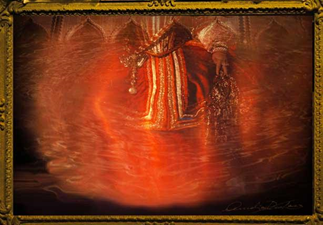
Berlin: element of the “broken chain” steel sculpture and.. Renzo Piano’s Debis building
Venice : lagoon waters – elements of Venetian carnival and architecture
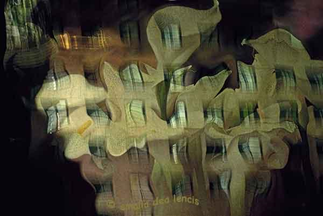
New York : Callas Dancing with Windows
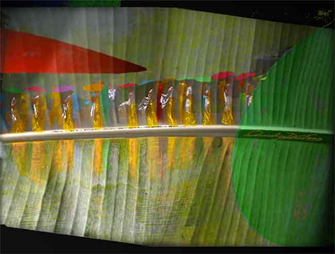
China, Yunnan Water festival: girls dancing by a pond and a banana leaf
Egypt : human “shadow” facing “Eternity” as Pharoah Ramses
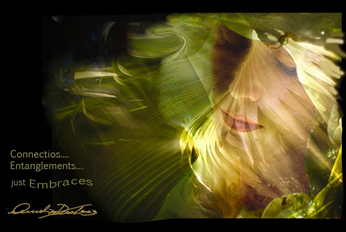
Sri Lanka: Amalia self portrait ( one of her first embraces )


” The drive, inspiring the mission of freelance travel-writer and photographer, stemmed from my desire to scout, embrace  the beautiful pleats of the world and pass their fragrant intimacy in words and images … (So far, eyes and heart have embraced some 65 countries, their charm visualized in hundreds of reportings– photo essays, signed Amalia Pellegrini,  full bred Italian heritage)

 
Along the way an  accident  drove photo-journalist Amalia  to develop, embrace  a new mission, with a new name: Amalia Dea Lencis.
It happened in Upper Egypt,  at Karnak, by the Nile.

When taking pictures of Ramses Pharaoh’s temple,  a fault in the camera Nikon F,  caused the over-exposure of the  films, hence useless  for any magazine editor.

Nevertheless I did not throw the films away . Actually they inspired my 3rd eye to explore, one by one,

by hand-lens, the hundreds of over-exposed slides laid on the light-table. 

Hence I started  a challenging, intuitive multi hours HUNT… seeking, selecting,  overlaying the slides .

I was emotionally over whelmed whenever  the “match” ( just one slide over the other ! ) visualized a composition as an  alchemic synthesis, an architecture of elements beyond imagination… 
Actually a vision whose  elements connect, entangle  in a harmonious,  unpredictable  embrace..


Today  artist  Amaliaoverlays  the photos of her digital camera  with a  digital tool. Nevertheless  it’s still  and always her 3rd eye that plays the rhythm, leads the  dance, composes …”just  Embrace”.

My challenging Hunt, creative Pleasure, world-wide  Mission is  still in  progress…

by Ramses accident ?.

Amalia Dea Lencis  8/8/2021

_________________________________________________________

“ HAPPY BIRTHDAY, JEAN “ a poem by my sister MLK ( Merle Lee Kwong )


My sister, Merle, apparently enjoyed The Atlantic’s Friendship-Files,

I send her. She wrote back to me this morning :

Hi Née Goo goo  ( No. 2 Brother ) ,

Writing really helps to express what is at times hard to express verbally to others 

Many years ago I wrote this to wish my best friend Jean , Happy Birthday .

She was an avid gardener and a wonderful, wonderful person .

She died just two months ago .

We became close friends after meeting at the hospital where I am at now – as volunteers 26 years-ago .  In the later years We both were tied to our homes because of caring for our husbands. We wrote to each everyday till she passed away.

Finally , now I get to enjoy wiggling my toes without any pain, and they are shipping me out to rehab this morning .  Where I hope to stay as long as I can and get the benefits of daily therapies. 

Thank you for sending me the friendship file     MLK ( from the hospital )

The Poem – “ HAPPY BIRTHDAY, JEAN ”

This is for my friend , Jean.
She nourishes all seeds she sown.
And smiles , while watching them grow.

My friend Jean .
Seeds to Grow

Spring is in full flirt mode.
Springs on us , in one deft move.
A surprise, long awaited.
Much to do.
Much to enjoy.

A new sun , dazzles the fleeting mist.
A flash of rain , clears the air.
Earth warms.
A welcomed bode for nature’s growth.

Last year’s daffodils , nodding to the sweet breeze.
Wild weeds sprout, intruding the tilted soil.
Let us weed , to make room for the better.
Even though, they too, are plants of nature.

Calendar in hand.
Almanac a ready.
Gardening gloves on and we are ready.
Seeds of spinach, lettuce, sprinkled on fresh soil.
Bulbs of garlic, beets and potatoes nestled deep.
Multiple seeds planted to harvest and to enrich.

Grow ! Grow ! Grow !

Wait !  Other seeds , she sows…..as well.
She sows seeds of kindness.
She sows seeds of joy.
She sows seed of friendship.
Let these seeds be blessed as well, by sharing.

Sow ! Sow! Sow!

________________________________________________

“ ICE BREAKERS IN PROMOTING FRIENDSHIP “ by Stephen Smuim – August 2021

May 2004, I was fortunate to take my students from Odyssey School to
China with Billy Lee as part of an art/environment project under Institute
1990’s auspicious.
We traveled to Shanghai and Beijing as part of our tour, spending times at
schools and organizations showing our environmental art and interacting
with students.
Often there was no plan for these interactions and I jumped in and did
some ice breakers/warm ups that could mostly be done without language to
get the students to interact.
Billy has asked me if I would share some of these activities. As a
consultant at Stanford University now I use these experiences a great deal
in the trainings I currently conduct. While they are primarily for
teachers/trainers, they certainly could be adapted to anyone working with
students, particularly students possessing different languages. I hope this
audience will find some value in these activities that can lead to
FRIENDSHIP building. Or at least some fun at the Thanksgiving/Christmas
big family dinner.

Activity #1 Visual Learner or Auditory Learners?

Ask participants to raise their right hand.
Now connect the index finger to the thumb so you have a nice circle.
Place your circle on your cheek but tell them to place the circle on their
chin.
Is the group primarily visual learners or auditory learners?
Many people do the “slide from cheek to chin” move.

Activity #2 Can My Brain do Two Functions at Once?

Ask the standing group to place their hands in front of them in the ready to
clap position.
Tell the group that when you hands cross [not clapping] they are to clap.
Begin by crossing your hands and having them clap each time.

The question usually arises if when you recross your hands is that time for
claps. Yes.
Get them into a rhythm of clapping hands and then just move your hands a
few inches without actually crossing your hands and invariably people will
clap anyway.
It is good to tell the group you will buy them all a………if they can clap on
all the crosses.

Activity #3 Can You Count to Three?

Ask the standing group to divide into pairs and face each other.
Tell the group to count to three by alternating he says which number.
A; 1
B: 2
A: 3
Have them do that for about 20 seconds.
Now tell the group that instead of 1 clap their hands and don’t say 1
A; clap
B: two
A: three
Have them do this for about 30 seconds, the laughter will begin.
Now tell the group that 1 is clap and 2 is now stomp your foot.
A: clap
B: stomp
A: three
Have them do that for 30 seconds and have fun with the foul ups that
occur.

Activity #4 Is This a Stick?
Have the group form a circle and put a two foot stick (or anything else) in
the center of the circle.
Taking turns, a person goes into the circle and says, “This is not a stick”
and does something with the stick to make it something else. Puts it to his
eye and says, “It is a telescope.”

The next person coming into the circle puts the “telescope” to her eye and
says “This is not a telescope, it is a toothbrush.”
The next person comes in and picks up the stick and starts brushing his
teeth and says…and so the game continues.

__________________________________________________

Stephen K. Smuin, as former Founding Head of the Odyssey Middle School and
Nueva Middle School, is completing his 42nd year as an educator. Stephen then spent
19 years at Nueva Learning Center in Hillsborough, CA, an international recognized
elementary school for gifted and talented students and founded the middle school. He
left Nueva to become co-founder of Odyssey School, a middle school for gifted and
talented students.
Steve has taught on the elementary, high school and college level and has published
three major books: Turn Ons!; Can’t Anybody Here Write?; and More Than Metaphors.
Steve has given over 125 workshops in the United States, Canada, Japan, China and
Germany and is most proud of being invited to present at the World Gifted Conference
on two occasions.
Recently, Steve become CEO of Da Vinci Educational Consultants, which provides,
assessments, training, workshops and lectures in Japan, China and Stanford University.

____________________________________________________

BILLY”S COMMENTS : Stephen was a Most Delightful Director to the
Chinese students and teachers in Beijing and Shanghai.. The Fun &
Sometimes A Bit Embarrassing Games quickly removed all the
ANXIETY from being STRANGERS. We should have more of these
ICE-BREAKING FUN EXERCISES. Indeed, we all should try to invent
one or two such creative games in order to understand more deeply
how FRIENDSHIP maybe be initiated.

Group Counseling: Teaching Social Skills to Enhance Friendships in Middle School Students -by Emily Worsnopp – School Counselor – N.Y.State – U.S.A. – 2007

The purpose of this group is to help middle school sixth and seventh grade
students with poor friendship skills learn specific social skills to improve peer
relationships
. Group topics include identifying positive friendship qualities, learning skills to enhance conversation abilities, recognizing the importance of body language in communication, and learning how to effectively solve friendship problems. Students are referred by teachers via a form provided by the School Counselor or through discussion at a student’s CSE meeting, and the group is appropriate for those who have few friends, are shy or withdrawn or who display inappropriate social skills that hinder friendship
development. The group is formatted to be held in five 30-minute sessions, and each group is designed for approximately six students.

Offering a small group to enhance the friendship skills of middle school students is important for a variety of reasons. At this stage, friendships may be especially significant to a healthy social development because adolescents frequently look to their friends to fulfill their emotional needs as well as to practice their socialization skills (Lefrancois, 1999, p. 348). Students lacking this social network thus may not have the necessary opportunities to learn how to best interact with their peers. Furthermore, adolescents who are unable to develop quality friendships experience heightened anxiety about school (Sunwolf & Leets, 2004, p. 196). There also is evidence that inclusion in a healthy peer group predicts academic success for sixth and eighth grade students (Wentzel & Caldwell, 1997, p. 1206). School counselors are in a position to help improve the academic and social success of students who have difficulties making and maintaining positive peer relationships by designing a group to teach them specific social skills that they can use to improve peer interactions and enhance friendships.

Teaching Social Skills to Enhance Friendship
Session : What Does it Mean to Be a Friend?

Author: Emily Worsnopp
Grade Level: 6/7
Group Size: 5 students
Time: 30 minutes
Setting: Small office (counseling office or conference room) with chairs set up in a circle

Goal:
ASCA Personal/Social Standard A: Students will acquire the knowledge, attitudes, and interpersonal skills to help them understand and respect self and others.
Objective: Students will be able to identify friendship qualities and discuss basic
friendship concepts.
Materials: 1 skein of yarn.
Procedure:
Ice Breaker Activity: The Spider Web
 Begin by explaining that the group will be doing an activity to get them
thinking about what friendship means to them.
 Give the ball of yarn to one student and ask him or her to name one quality
that they consider as important in a friendship. Have the student pass the ball
of yarn to another student to continue the “web” until everyone has identified
one quality that is important to her or him. Before “cleaning up” web connect
the image of a web to friendship (interconnected, reliant upon many parts,
etc.)

Discussion: Have students continue to talk about friendship qualities. Some questions to ask include:
 Is your view of friendship the same as everyone else in the group? What is
different?
 Why is a certain quality more important to you than others?
 Are there different ways to act with different friends? (ex: acquaintances,
close friends)

 What are some easy/difficult things about maintaining friendships?
 Do they have friends that have some of these qualities?
 What do they think makes them a good friend?
Homework: Introduce the idea of homework and explain its purpose in helping to
transfer the things discussed in the group to their everyday life. Have students pay
attention to interactions that they have with their peers until the next session. What
friendship qualities do they already exhibit? Are they happy with their friendships?
What is missing (from what they do and from what others do) Have students write self observations down and keep observations in friendship folder to discuss at next meeting.
Evaluation: Students evaluated based upon their ability to identify and discuss
friendship skills.

Teaching Social Skills to Enhance Friendship
Session : Conversation and Listening Skills

Author: Emily Worsnopp
Grade Level: 6/7
Group Size: 5 students
Time: 30 minutes
Setting: Small office (counseling office or conference room) with chairs set up in a
circle

Goals:
ASCA Personal/Social Standard A: Students will acquire the knowledge, attitudes, and interpersonal skills to help them understand and respect self and others.
NYS CDOS Standard 3a: Universal Foundation Skills
NYS ELA Standard 4: Language for Social Interaction
NYS Arts Standard 1: Creating, Performing and Participating in the Arts
Objective: Students will be able to effectively initiate and maintain a conversation and understand how conversation skills are important to friendship development and maintenance.
Materials: Conversation and Listening Skills worksheet
Procedure:
Follow-Up on Homework Discussion:
 Begin by having students discuss reactions to homework from previous week.
 What did they discover? How did interactions with peers make them feel? How do they feel about their current friendships?
 Have students name one of the qualities identified in Session 2 that they
exhibited.
 Transition to new Lesson: Expanding your social network and communicating
effectively with others:

 Begin by discussing why being able to effectively start conversations and
communicate with others is essential to developing successful relationships. It is
important to know how to start, continue and end conversations for success.
 Ask student to discuss what is scary/easy about starting new conversations, and what is challenging for them about having conversations, especially with new people.
 Pass out “Conversation skills and Listening Skills” worksheet and discuss.
 Have group members role play conversation skills (ask for volunteers).
Encourage all students to participate. Ask members to come up with situations
that might be challenging for them. Examples might include meeting a new
person, asking for help, pairing up with someone for a class project.
 Have student reflect on role-play. How did it feel to be the one initiating the
conversation? Responding?

Conversation and Listening Skills

 Approach with confidence.
 Make eye contact.
 Ask questions about things that interest the other person.
 Focus on the person talking.
 Get your point across without interrupting.
 Listen and respond actively.
 Close conversation appropriately. (“It’s been nice talking”,
“See you later”)

Teaching Social Skills to Enhance Friendship
Session : Understanding Body Language

Author: Emily Worsnopp
Grade Level: 6/7
Group Size: 5 students
Time: 30 minutes

Setting: Small office (counseling office or conference room) with chairs set up in a circle
Goals:
ASCA Personal/Social Standard A: Students will acquire the knowledge, attitudes, and interpersonal skills to help them understand and respect self and others.
NYS CDOS Standard 3a: Universal Foundation Skills
NYS ELA Standard 4: Language for Social Interaction
NYS Arts Standard 1: Creating, Performing and Participating in the Arts
Objective: Students will be able to effectively demonstrate and describe positive and negative body language and relate these skills to friendship enhancement.
Materials: Body Language in Communication handout
Procedure:
Homework Review:
 Use “go around” method and ask students to share conversation experiences.
Were they able to initate conversations? What was difficult about it? What was
easy? Did they learn anything?
Transition to new topic:
 Explain the importance of body language for communicating.
 Pass out Body Language in Communication worksheet and discuss body language “dos” and “don’ts” and review worksheet. Practice body language styles on sheet, and encourage students to have fun with it, especially the “don’ts” category.
 Have students get into pairs. One pair at a time, have student briefly talk about
any topic. One person should talk and the other should demonstrate body
language “don’ts”. Have partners switch roles but now have the listener
demontrate body language “dos”. After each group has gone have students go
around the room and discuss behaviors that they noticed and how it made them
feel (as the listener and talker).
 Did members notice any ways that they (or others) use body language effectively
in the group? Go around and ask people how they think their body language
impacts how peers view them. How can body language impact friendship?
Evaluation: Students are evaluated based upon their ability to effectively describe and demonstrate appropriate and negative body language and discuss the importance of body language to friendship enhancement.

Body Language in Communication

The communication process is nonverbal as well as verbal. Behavior expresses meaning,
sometimes more clearly than words. To be effective in our relationships with others, we
need to be able to tune into body language and tone of voice. Did you know

 70% of our communication comes through our body language.
 23% of our communication is through our tone of voice.
 7% of what we communicate is through our words.

We need to pay attention to how we say things as well as what we say.

Dos Don’ts
Eyes good eye contact Stare, glare, jittery, no eye contact

Voice (volume) loud enough to be heard clearly too soft or loud

Voice (tone) tone communicates
understanding – disinterested, gruff tone, sarcastic

Facial expressions matches your own or other’s feeling; smile frown, yawn, sigh, scowl, blank look

Posture

leaning forward slightly, relaxed

leaning away, rigid,
slouching, crossing arms
Movement toward away
Distance arm’s length too close (less than 2 feet) / too far (more than five feet)

Teaching Social Skills to Enhance Friendship
Session : Problem Solving and Termination

Author: Emily Worsnopp
Grade Level: 6-8

Group Size: 5-7 students
Time: 30 minutes
Setting: Small office (counseling office or conference room) with chairs set up in a
circle

Goals:
ASCA Personal/Social Standard A: Students will acquire the knowledge, attitudes, and interpersonal skills to help them understand and respect self and others.
ASCA Personal/Social Standard B: Students will make decisions, set goals and take
necessary actions to achieve goals.
NYS CDOS Standard 3a: Universal Foundation Skills
NYS ELA Standard 4: Language for Social Interaction
NYS Arts Standard 1: Creating, Performing and Participating in the Arts
Objective: Students will be able to identify problem solving steps and apply them
effectively to solve interpersonal conflicts.
Materials: Problem Solving Steps worksheet for each student. Easel or
white/blackboard and markers/chalk for brainstorming activity.
Procedure:
 Explain to students that sometimes, even with good friends, we can encounter
conflicts with our friends that might be difficult to solve.
 Pass out Problem Solving Steps worksheet and explain that there are specific
steps that people can take to solve a problem with friends. Using these problems
can help to alleviate stress and avoid more difficult situations with friends in the
future.
 Ask students to volunteer a situation (real or imaginary) that demonstrates a
problem that friends can experience.
 After a situation has been established, work with students to help them see how
they can use the problem solving steps to solve problems with their friends. To
help with choosing the best solution, have students discuss them and role play
some possible solutions. After role plays, have the participants and group
members discuss if the scenario worked, or how a better solution can be reached.
Termination:
 Use the “go around” method to have each participant talk about what they feel
that they are best taking away from the group. Have they made progress with
making and keeping friendships? What has been useful to them? How confident
are they feeling about being able to use the skills in the group to help improve
their friendships in the future?
Evaluation: Students are evaluated based upon their ability to apply problem solving techniques to role play exercises.

Problem Solving Steps

1: Identify the problem.

2: Think of ALL possible solutions. Write them down if you can,
or talk them out with someone.

3: Think about the consequences of each possible solution. Ask
yourself “What could happen if I did this?” Think about how each
solution impacts you and others.

4: Choose the best solution.

5: Put the solution into action! If appropriate, practice the solution
with someone else before hand.

References

Brigman, G. & Goodman, B. E. (2001). Communicating with body language. Group
Counseling for School Counselors: A Practical Guide (pp. 167-168). Portland,
ME: J. Weston Walch.
Forth, S. (2004). Lesson 32: What is a healthy choice? New York State school
counselor
association comprehensive school counseling program: Middle level activity
book (pp. 73-75). New York: New York State School Counselor Association.

Hulse, C. M. (2004). Lesson 38: The spider web. New York State school counselor
association comprehensive school counseling program: Middle level activity
book (pp. 88-89). New York: New York State School Counselor Association.
Lefrancois, G. R. (1999). The Lifespan (6 th ed.). Belmont, CA: Wadsworth Publishing
Company.
Richardson, R. C. & Evans, E. T. (1996). Rules for listening. Connecting with others:
Lessons for teaching social and emotional competence, grades 6-8 (p. 82).
Champaign, IL: Research Press, p. 82.
Sunwolf & Leets, L. (2004). Being left out: Rejecting outsiders and communicating
group
boundaries in childhood and adolescent peer groups. Journal of Applied
Communication Research, 32(3), 195-223.
Waksman, S. & Waskman, D. D. (1998). Conversation Skills. The waksman social skills
curriculum for adolescents: An assertiveness behavior program (4 th ed.) (pp. 31-
35). Austin, TX:Pro-Ed.
Wentzel, K. R. & Caldwell, K. (1997). Friendships, peer acceptance, and group
membership:
Relations to academic achievement in middle school. Child Development, 68(6),
1198-1209.

______________________________________________________________


BILLY’S COMMENTS : This and the adjacent articles – ‘Suggested Questions for
Initiating a Conversation’ by GGSC and ‘Ice Breakers‘ by Stephen Smuin all focus on Methods. Indeed, TEACHING HOW is equally important as LEARNING WHY.

______________________________________________________________